Snake Plant Care Guide: How to Grow Sansevieria Trifasciata Indoors
Indoor Plants, Snake Plant Care, Beginner Gardening
Snake Plant Care Made Simple: Grow Sansevieria Trifasciata Indoors With Confidence
If you’ve ever said, “I love plants, but they always die on me,” the snake plant might just change your mind. This tough, good-looking houseplant is famous for being almost impossible to kill, making it a perfect first plant for beginners, busy people, and anyone who wants greenery without the stress. Let’s walk through everything you need to know about indoor plant care, snake plant benefits, and easy plant maintenance—step by step, and in plain language.
Meet the Snake Plant: Tough, Stylish, and Beginner-Friendly
Snake plant—often labeled as Sansevieria trifasciata or Dracaena trifasciata, and sometimes called mother-in-law’s tongue—is a sturdy, upright houseplant with thick, sword-like leaves. The leaves usually have dark green bands with lighter, wavy stripes, and many varieties have a yellow edge that makes them stand out even more on a shelf or in a corner.
Instead of growing from a central stem, snake plants grow from underground rhizomes—think of them like chunky roots that store water and energy. This is one of the big reasons they’re so forgiving. They can handle missed waterings, less-than-perfect light, and a bit of neglect, yet still look sharp and architectural in your space.
Why Snake Plants Are So Popular for Indoor Plant Care
Snake plants have become a staple in homes and offices, and it’s not just because they look good. They tick several boxes that matter for beginners and busy plant parents. Let’s look at the main snake plant benefits in simple terms.
They’re extremely low-maintenance. You don’t need a strict schedule or special tools—just the right pot, soil, and a bit of common sense with watering.
They tolerate low light. While they do better in brighter spots, they can survive in rooms that many other plants would hate, like hallways or offices with limited windows.
They help create a calmer, greener space. A tall, upright snake plant instantly makes a room feel more finished, cozy, and connected to nature.
They’re forgiving of mistakes. Overwater once, forget to water for a while, or move the pot around—your plant will usually bounce back if you correct things in time.
💡 Friendly tip: If you’re nervous about indoor plant care, start with a snake plant. It will teach you the basics without punishing you for every small mistake.
Light Requirements: How Bright Should It Be?
Snake plants are flexible when it comes to light, which is one of the reasons they’re so popular. They grow best in bright, indirect light—near a window where the sun doesn’t hit the leaves directly for long periods. In this kind of light, you’ll see stronger, thicker leaves and more active growth.
That said, they will tolerate low light. If you tuck a snake plant into a dim hallway or a corner of your bedroom, it may grow more slowly, but it will usually hang in there. What they do not like is harsh, direct midday sun right through a window—this can scorch the leaves and leave dry, bleached patches.
Signs Your Snake Plant Needs More Light
Very slow or no new growth during the brighter months of the year.
Leaves leaning strongly toward a window or stretching in one direction.
New leaves are thin or weak, instead of thick and sturdy.
If you notice these signs, move your plant a bit closer to a window, or try a brighter room. Rotating the pot every few weeks also helps keep the growth even and upright.
Watering a Snake Plant: Less Is Definitely More
Watering is the part of plant maintenance that causes the most trouble for beginners—and snake plants are no exception. The number one way people kill this plant is by watering too often. Those thick leaves and rhizomes store water, so the plant is built to handle dry spells much better than soggy soil.
How Often Should You Water?
There isn’t a one-size-fits-all schedule, because it depends on your home’s light, temperature, humidity, pot size, and soil. Instead of counting days, use this simple rule: water only when the soil is completely dry at least halfway down the pot. You can check by sticking your finger in, or by using a simple moisture meter if you prefer a gadget.
In a bright, warm room, you might water every 2–3 weeks in summer.
In a cooler or darker room, you might water only once a month—or even less—especially in winter.
When you do water, water thoroughly until a bit runs out of the drainage holes, then empty any water that collects in the saucer. Letting the pot sit in water is a shortcut to root rot, even for a tough plant like this.
Signs of Overwatering vs. Underwatering
Overwatering signs: yellowing leaves, mushy or soft leaves, a soft or smelly base, or soil that never seems to dry out. If you see these, check the roots and consider repotting into fresh, drier soil.
Underwatering signs: wrinkled, slightly curling leaves, or leaves that feel thinner than usual. In this case, give the plant a good drink, then return to your “water when dry” routine.
💡 Friendly tip: If you’re unsure whether to water, wait a few more days. Snake plants handle dryness far better than sitting in wet soil.
Soil, Pots, and Drainage: Setting Your Plant Up for Success
Good indoor plant care starts below the surface. Snake plants need well-draining soil—something that lets water run through easily instead of staying heavy and soggy. A regular houseplant mix can work if you lighten it up by adding ingredients like perlite, pumice, coarse sand, or small gravel. You can also use a cactus or succulent mix, which is usually designed to drain quickly.
Just as important as the soil is the pot. Always choose a pot with drainage holes. Decorative pots without holes might look nice, but they trap water at the bottom and quietly damage the roots over time. If you love a pot with no drainage, use it as a cover pot—keep your snake plant in a plastic nursery pot with holes, and simply slip it inside the prettier container.
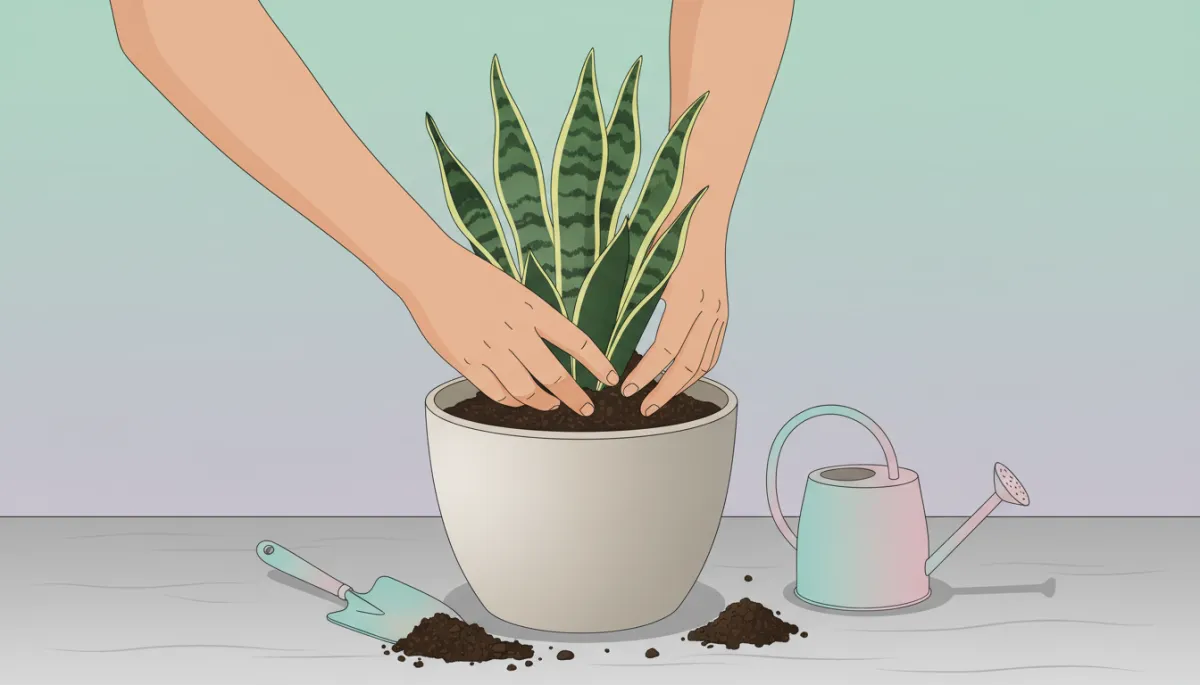
Close-up of hands repotting a snake plant into a ceramic pot with well-draining soil on a tidy...
Well-draining soil and a pot with holes prevent root rot and keep snake plants thriving.
Temperature, Humidity, and Fertilizer: The “Nice-to-Haves”
Snake plants are happiest in the same temperature range most people enjoy indoors—roughly 65–85°F (18–29°C). They do not like cold drafts, frosty windows, or being left outside in chilly, wet weather. Keep them away from air-conditioning blasts, drafty doors, and cold, damp spots, especially in winter.
Humidity isn’t a big concern. Unlike tropical plants that crave steamy bathrooms, snake plants handle normal dry indoor air just fine. You don’t need a humidifier or misting routine for them. That’s one less thing on your plant maintenance list.
As for fertilizer, think of it as a gentle bonus, not a requirement. During the warmer growing months—spring and summer—you can feed your snake plant once or twice with a balanced, diluted houseplant fertilizer. Avoid fertilizing in the colder months, when the plant is resting, or if it’s stressed from overwatering or repotting. Too much fertilizer can burn the roots and do more harm than good.
Simple Plant Maintenance: Pruning, Cleaning, and Repotting
Day-to-day snake plant care is wonderfully simple. You won’t be constantly trimming or reshaping it. Still, a little occasional maintenance keeps your plant looking its best and helps you catch small problems early.
Pruning: If a leaf turns yellow, gets badly damaged, or flops over, you can remove it. Use clean scissors or a sharp knife, and cut the leaf near the soil line. This won’t hurt the rest of the plant—in fact, it can encourage fresh, healthy growth.
Cleaning leaves: Dust tends to settle on those broad, upright leaves, especially in dry homes. Every few weeks, gently wipe them with a soft, damp cloth from base to tip, supporting the leaf with your other hand. Skip leaf shine sprays; they can clog the pores and make the plant look unnaturally glossy.
Repotting: Snake plants actually like being a bit snug in their pots. You only need to repot when roots are pushing out of the drainage holes, the pot is cracking, or the plant is so top-heavy it keeps tipping. When you do repot, go just one pot size up, and refresh the soil with a well-draining mix.
Safety, Placement, and Picking Your Favorite Variety
One more important note for indoor plant care—especially if you have pets. Snake plants are considered toxic to cats and dogs if eaten. They contain natural compounds that can cause nausea, vomiting, and diarrhea. Many pets ignore them, but if you have a curious chewer, it’s best to place your plant out of easy reach, on a shelf, plant stand, or in a room your pets don’t spend much time in.
As for where to put your snake plant, you have lots of options. They look great in:
A bright bedroom corner, adding a calm, vertical accent.
An office or home workspace, where they bring a bit of green without demanding attention.
Living rooms near a window, paired with other plants at different heights for a cozy, layered look.
Hallways or entryways that get at least a little natural light during the day.
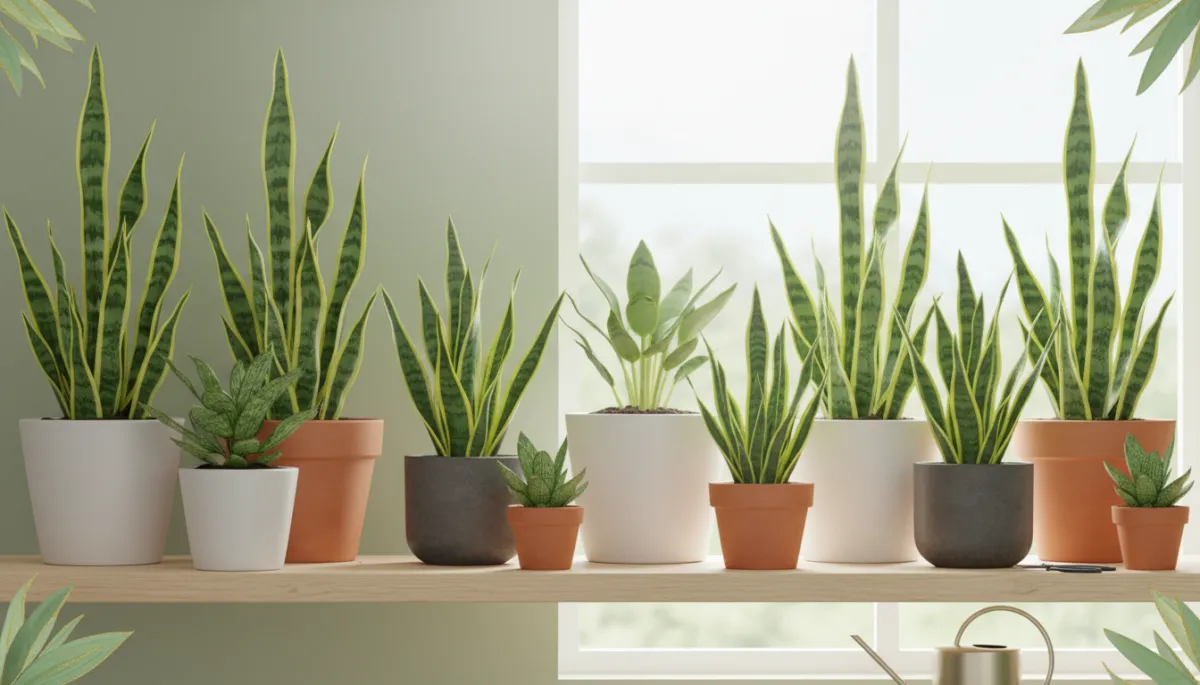
There are also several beautiful varieties to choose from. The classic green patterned snake plant is always a good choice, but you can also find tall, dramatic types, shorter, compact ones for desks or shelves, and variegated versions with bold yellow or cream edges. Pick the one that fits your space and style—care is essentially the same for all of them.
Seasonal Care: Adjusting Your Routine Through the Year
Snake plants don’t need dramatic seasonal changes in care, but a few small adjustments will keep them happier long-term. In the warmer, brighter months, they’re more active—growing new leaves and using more water. During this time, you’ll likely water a bit more often, always waiting for the soil to dry out first, and you can give a light fertilizer once or twice if you’d like.
In cooler months, especially winter, growth slows down. The soil stays wet longer, and your plant doesn’t need as much water or any fertilizer. This is when overwatering is especially risky. It’s perfectly normal to water only once every few weeks, or even less, depending on your conditions. Trust the dry-soil test, not the calendar.
Common Mistakes to Avoid With Snake Plants
Watering on a strict schedule instead of checking if the soil is dry.
Using a pot without drainage holes, or letting the pot sit in a saucer full of water.
Planting in heavy, compact soil that stays wet for days on end.
Keeping the plant in a cold, drafty spot or right against a frosty window.
Ignoring early signs of trouble—like yellowing leaves, mushy spots, or a musty smell in the soil.
Bringing It All Together: A Beginner-Friendly Plant That Actually Lives
Snake plants are popular for a reason—they’re stylish, strong, and surprisingly forgiving. If you’re just getting started with indoor plant care, they offer the perfect mix of beauty and low effort. Give them bright, indirect light when possible, let the soil dry out fully between waterings, use a pot with drainage and a well-draining mix, and keep them away from cold drafts. Add occasional cleaning, light pruning, and rare repotting, and that’s really it for plant maintenance.
With a little attention and the simple tips you’ve just learned, your snake plant can thrive for years—quietly greening up your home, making your rooms feel more inviting, and proving that yes, you can keep a plant alive. Start with one, see how easy it can be, and you might just find yourself building a whole indoor jungle from this one confident step.