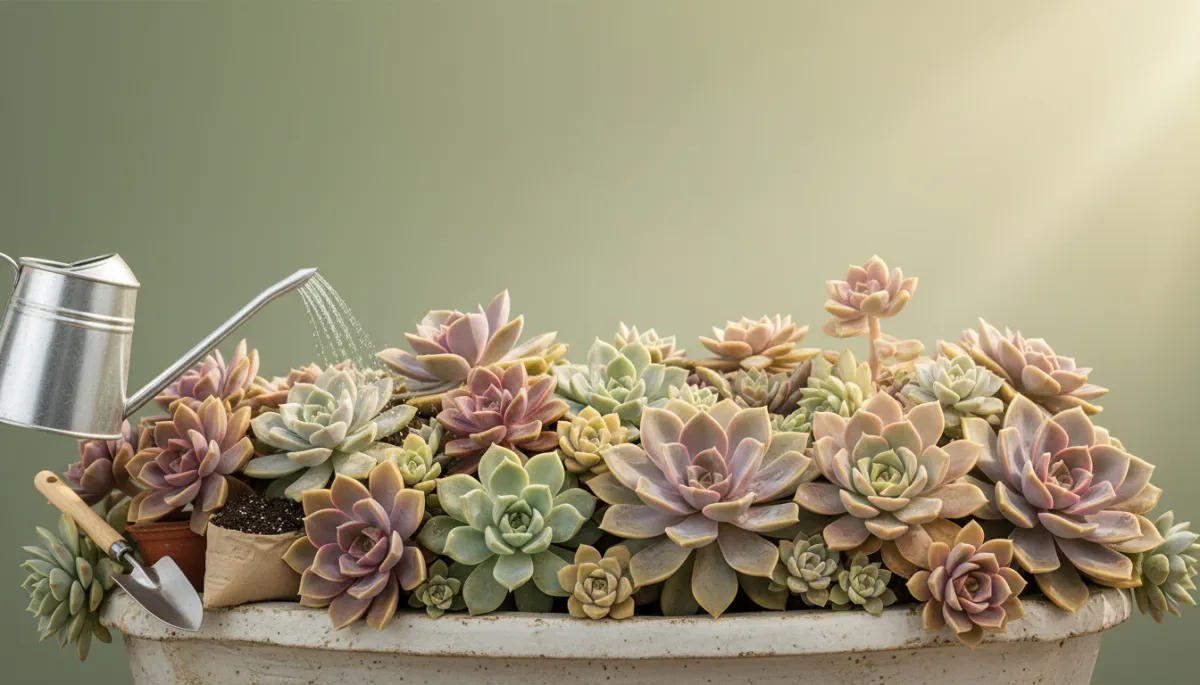
Echeveria Care Guide: The Complete Beginner-to-Expert Guide to Growing Healthy, Colorful Echeverias
Succulents, Echeveria Care, Beginner Plant Care
Echeveria Care Guide: From First Succulent to Colorful, Thriving Rosettes
Thinking about adding an Echeveria to your space—or already have one and want to keep it alive, happy, and colorful? You’re in the right place. This friendly guide walks you through Echeveria care, succulent gardening basics, and beginner plant care tips so your rosettes stay plump, vibrant, and very much alive.
Echeveria Care at a Glance
Care Category Recommendation Botanical name Echeveria spp. Plant type Rosette-forming succulent Size About 4–12 inches wide, depending on variety Sunlight 4–6 hours of bright, direct or very bright indirect light Watering Infrequent, deep watering—let soil dry completely between waterings Soil Fast-draining succulent or cactus mix, never heavy garden soil Temperature Warm, above 50°F (10°C); protect from frost and drafts
What Is an Echeveria?
Echeverias are rosette-forming succulents native mainly to Mexico and parts of Central America. In the wild, they grow in rocky, well-drained areas with plenty of sun and not a lot of rain—exactly the conditions that shaped their tough, water-storing leaves and compact shapes. Today, there are hundreds of species and hybrids, ranging from powdery blue rosettes to frilly pink, purple, or even nearly black varieties.
For beginners, it helps to think of Echeverias as little desert roses—beautiful, fairly low-maintenance, and happiest when you resist the urge to fuss over them every day. Understanding where they come from makes their care needs feel a lot more intuitive.
Why Echeverias Are Perfect for Beginner Succulent Gardening
If you’re just getting into succulent gardening or beginner plant care, Echeverias are a fantastic place to start. They’re forgiving, they don’t demand constant attention, and when you get the basics right—light, water, and soil—they reward you with tight, symmetrical rosettes and gorgeous color shifts throughout the year.
They tolerate a missed watering or two without drama.
They grow slowly, so they won’t outgrow your space overnight.
They’re easy to propagate, meaning one plant can eventually become many.
💡 Beginner tip: With Echeverias—and most succulent gardening—less is more. Less water, less fertilizer, and less hovering usually equal healthier plants.
The Color Secret: Sunlight Makes Echeverias Glow
Have you ever brought home a beautifully pink or purple Echeveria, only to watch it slowly turn plain green? That’s almost always a light issue. Many of those intense colors appear when the plant gets plenty of bright light. In lower light, Echeverias tend to relax into softer, greener shades, and their rosettes can stretch as they reach for the sun.
The good news is that you don’t need desert-level sunlight to keep them colorful—just consistent, bright light and a bit of patience. Over a few weeks, you’ll see deeper tones return as your plant adjusts to better lighting.
Sunlight Requirements for Healthy, Compact Rosettes
Light is the single most important part of Echeveria care. Aim for 4–6 hours of bright, direct sun, or very bright indirect light, every day. Indoors, that usually means a sunny window; outdoors, it means a spot with strong morning sun and gentler afternoon conditions, especially in very hot climates.
Best Indoor Spots for Echeverias
South-facing windows with several hours of direct sun
Bright east-facing windows with strong morning light
Sunny sunrooms or glass doors where light is consistent
Rotate your pot every week or so—this helps the rosette grow evenly instead of leaning toward one side. If your home is quite dim, a small grow light can make a huge difference for succulent gardening indoors.
Best Outdoor Spots for Echeverias
Patios or balconies with bright morning sun and afternoon shade
Raised beds or containers in well-drained, sunny spots
⚠️ Easy mistake: Moving an Echeveria straight from a dim windowsill into full, harsh sun can cause sunburn. Always increase light gradually over a week or two.
Signs Your Echeveria Needs More Light
The stem stretches and the rosette looks tall and leggy.
Leaves grow farther apart with big gaps between them.
The plant leans strongly toward the nearest window.
Bright colors fade to a softer, plain green.
This stretching process is called etiolation, and it can’t be reversed on the old growth. However, you can improve light and encourage new, compact growth at the top—or even behead the plant later and re-root the rosette as part of your succulent gardening experiments.
Watering Echeverias: Why Less Is Usually Better
Overwatering is the number one way beginners accidentally kill Echeverias. Remember, these plants store water in their leaves, so they’re built to handle dry spells. Instead of watering on a strict schedule, use the “soak and dry” method—water thoroughly, then wait until the soil is completely dry before watering again.
Indoors, this might mean watering every 2–4 weeks, depending on light and pot size.
Outdoors in hot weather, it may be a bit more often—but still only when the soil is dry.
💡 Beginner rule of thumb: When in doubt, wait a few more days. Slight underwatering is almost always easier to fix than overwatering.
Signs of Overwatering
Leaves turn yellow, translucent, or feel mushy when gently squeezed.
The stem softens or develops dark, soggy patches.
You notice a sour smell from the soil—often a sign of root rot.
If this happens, stop watering immediately, let the soil dry out, and consider gently unpotting the plant to check the roots. Trim away any black, mushy roots and repot into fresh, dry succulent soil. It’s a bit of plant surgery, but it can save your Echeveria.
Signs of Underwatering
Leaves look wrinkled or feel thinner than usual.
The rosette droops slightly or loses some of its plumpness.
Thankfully, this is usually easy to fix—give the plant a deep drink, allow excess water to drain away, and your Echeveria should perk back up within a few days. Just don’t swing to the opposite extreme and start watering too often.
Choosing the Right Soil for Echeverias
Soil is a big part of successful succulent gardening. Regular potting soil holds too much moisture for Echeverias, which can lead straight to root rot. Instead, look for a commercial succulent or cactus mix, or make your own blend by combining potting soil with gritty materials like perlite, pumice, or coarse sand to improve drainage.
Aim for soil that feels light, airy, and dries out quickly after watering.
Avoid mixes that stay wet or compact for more than a few days.
Picking the Best Pot for Your Echeveria
The pot you choose matters more than most beginners realize. Terracotta and unglazed clay pots are excellent for Echeverias because they breathe—the clay absorbs a bit of extra moisture and helps the soil dry out faster. Ceramic pots can also work well, as long as they have drainage holes at the bottom. No drainage holes, no deal.
Choose a pot just slightly wider than the rosette—too large, and the soil may stay wet for too long.
Always use a saucer or tray you can empty so roots aren’t sitting in water.
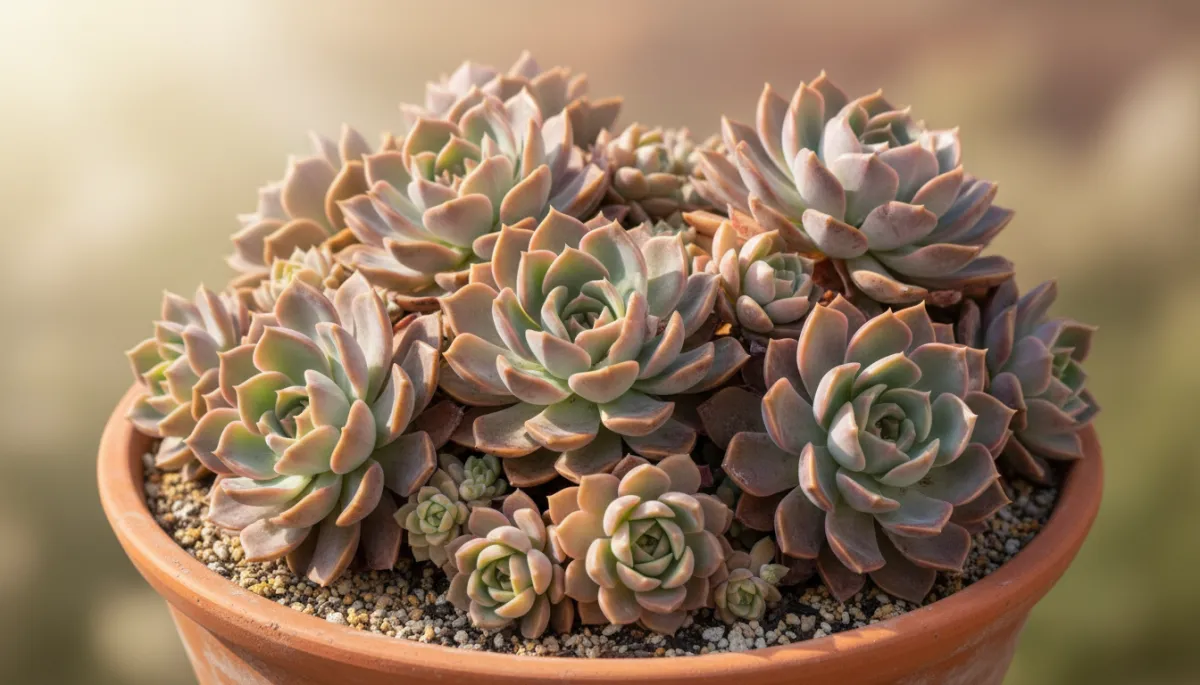
Well-draining soil and breathable pots are the backbone of healthy Echeveria care.
Temperature and Humidity: Keeping Echeverias Comfortable
Echeverias love warm, dry conditions. Most varieties are happiest between about 60–80°F (15–27°C). They don’t appreciate cold drafts, sudden temperature swings, or frost. If you grow them outdoors and your winters are chilly, bring them inside before nighttime temperatures drop below 50°F (10°C).
As for humidity, average household levels are usually fine. Just avoid placing your Echeveria right next to a humidifier or in a steamy bathroom—too much moisture in the air can encourage rot and fungal issues.
Do Echeverias Flower?
Yes, and the flowers are a lovely bonus. A healthy, mature Echeveria can send up arching flower stalks from the center or side of the rosette. The blooms are often pink, orange, yellow, or red, and they usually appear in late spring or summer when the plant is feeling particularly content with its care.
You can enjoy the blooms as part of your display, or trim the flower stalks once they start to fade—either option is perfectly fine for the plant. Flowering is a sign that your basic Echeveria care is on the right track.
How to Propagate Echeverias: Three Easy Methods
One of the joys of succulent gardening is turning one plant into many. Echeverias are especially generous this way. You can propagate them from leaves, offsets (baby rosettes), or stem cuttings—each method is beginner-friendly if you’re patient.
Leaf Propagation
Gently twist off a healthy leaf from the base of the rosette, making sure it comes away cleanly without tearing.
Let the leaf dry on a tray for 1–2 days until the end callouses over.
Lay it on top of dry succulent soil in bright, indirect light, and mist very lightly every so often.
Tiny roots and baby rosettes will appear at the base over several weeks.
Offset Propagation
Look for small rosettes (offsets or “pups”) forming around the base of the main plant.
Gently loosen the soil and separate the offset, keeping as many roots attached as possible.
Plant it in its own small pot with fresh succulent soil, and water lightly after a few days.
Stem Cuttings
If your Echeveria has stretched, use a clean, sharp tool to cut off the top rosette, leaving a short stem attached.
Let the cutting dry and callous for a few days.
Place it on or slightly in dry succulent soil, then begin light watering after a week or so when roots start forming.
10 Common Beginner Mistakes with Echeverias
Mistake Better Habit Watering on a strict schedule Check soil first—only water when it’s completely dry. Using heavy potting soil Switch to a gritty succulent or cactus mix. Choosing pots without drainage Always pick pots with drainage holes—no exceptions. Keeping plants in low light Move closer to a bright window or add a grow light. Over-fertilizing Feed lightly once or twice during the growing season, or not at all.
Simple Styling Ideas for Echeverias at Home
Once you’ve mastered the basics of Echeveria care, you can have fun styling them around your home. Their neat rosettes and soft colors fit beautifully into neutral, minimalist, or cozy spaces alike.
Cluster three small Echeverias in matching pots on a coffee table tray.
Add one to a bookshelf next to your favorite stack of paperbacks.
Create a mini succulent garden in a shallow bowl with a mix of colors and textures.
A Simple Seasonal Care Calendar
Season What to Focus On Spring Resume light fertilizing, increase watering slightly, and refresh any tired soil. Summer Watch for heat stress outdoors, provide bright light, and water when soil is fully dry. Fall Slowly reduce watering, bring outdoor plants inside before frost, and check for pests. Winter Water very sparingly, keep in the brightest spot possible, and avoid cold drafts.
Frequently Asked Echeveria Questions
Are Echeverias good for beginners? Absolutely. As long as you give them bright light, fast-draining soil, and infrequent watering, they’re among the easiest succulents to keep alive and thriving.
Why is my Echeveria turning green and stretching? That usually means it needs more light. Move it closer to a sunny window or add a grow light, and rotate the pot regularly so it grows evenly.
How often should I water my Echeveria? There’s no one-size-fits-all schedule, but a good starting point is every 2–4 weeks indoors. Always let the soil dry out completely before you water again.
Final Thoughts: Relaxed Plants, Relaxed Plant Parents
Echeverias are wonderful teachers for anyone new to succulent gardening or beginner plant care. They show you that plants don’t always need constant attention—just the right kind. Give them bright light, a gritty, well-draining soil mix, a pot with drainage, and the occasional deep drink of water, and they’ll quietly thrive in the background of your life.
Start with one Echeveria, learn its rhythms, and let your confidence grow along with it. Before long, you may find yourself with a whole windowsill of colorful rosettes—and the reassuring feeling that, yes, you really can keep plants alive.