Echeveria Dusty Rose Care Guide: How to Grow and Maintain This Beautiful Pink Succulent
Succulent Care, Echeveria Dusty Rose, Plant Maintenance
Echeveria Dusty Rose Care Guide: Grow and Maintain This Beautiful Pink Succulent with Confidence
If you’re looking for a succulent that’s as charming as it is low-maintenance, Echeveria Dusty Rose is a wonderful choice. With its soft pink-lavender rosettes and easygoing nature, it’s perfect for beginners who want a plant that actually thrives—not just survives—on a sunny windowsill or patio.
Echeveria Dusty Rose Care at a Glance
Care Category Recommendation Botanical Name Echeveria ‘Dusty Rose’ Plant Type Rosette-forming succulent Mature Size About 6–8 inches wide, low-growing Growth Rate Slow to moderate Sunlight 4–6 hours of bright, direct or very bright indirect light Watering Soak-and-dry method; every 2–3 weeks in growing season Soil Fast-draining cactus or succulent mix Temperature Prefers 65–80°F (18–27°C); protect below 50°F (10°C)
What Is Echeveria Dusty Rose?
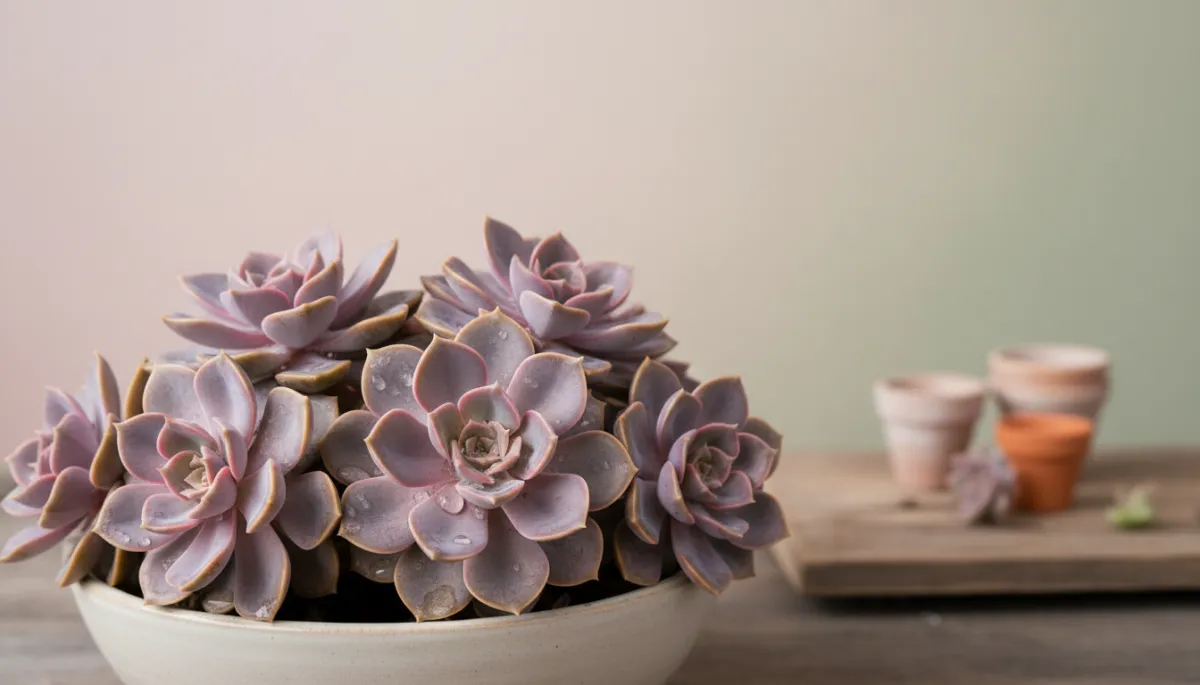
Echeveria Dusty Rose is a hybrid succulent known for its compact, symmetrical rosette and dreamy pastel tones. The leaves are thick, slightly pointed, and coated with a soft, powdery layer that gives them a “dusty” look—hence the name. Depending on light and temperature, you’ll see shades of pink, lavender, and purple-gray blending together like watercolor.
Because it stays relatively small and tidy, this plant is ideal for containers, mixed succulent arrangements, and small spaces. It’s a fantastic starter plant if you’re new to succulent care and want something pretty but not fussy.
Why Echeveria Dusty Rose Is So Popular
Its Color Is Soft and Unique
Instead of bright green foliage, Dusty Rose offers muted, romantic tones that work beautifully with neutral décor. Under strong light, the pinks deepen and the edges may blush, giving it a sophisticated, almost pastel-rose look that feels calm and modern at the same time.
It Looks Like a Flower All Year
The rosette shape mimics a blooming flower that never really fades. Even when it’s not producing flower stalks, the plant itself looks like a perfectly arranged blossom—making it incredibly photogenic on shelves, desks, and coffee tables.
It’s Beginner-Friendly
Despite its delicate appearance, Echeveria Dusty Rose is quite forgiving as long as you avoid its main enemy—overwatering. Give it bright light, well-draining soil, and time to dry out between waterings, and it will reward you with steady, healthy growth without demanding constant attention.
It Fits Almost Any Space
Because it stays compact, Dusty Rose works beautifully in apartments, home offices, bedrooms, kitchens, and on outdoor patios. It also pairs nicely with other succulents—especially green, blue-gray, or deep purple varieties—so you can build pretty, low-maintenance arrangements with ease.
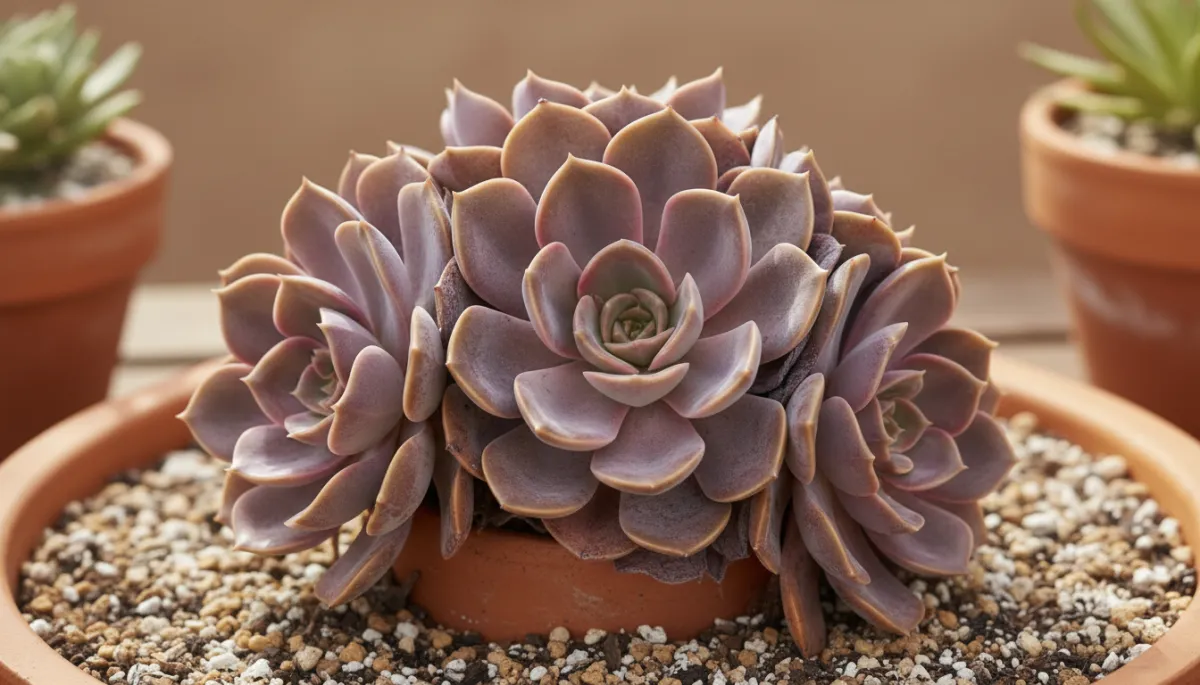
Grouping Dusty Rose with other neutrals creates a soft, calming display.
Sunlight Requirements for Healthy Color
Light is one of the most important parts of succulent care, especially for Echeveria Dusty Rose. To keep its colors vibrant and its rosette compact, aim for 4–6 hours of bright light each day.
Indoor Placement Tips
Place near a south- or east-facing window where it gets bright light most of the day.
Rotate the pot every week or two so the rosette grows evenly and doesn’t lean toward the light.
If your home is dim, consider a small grow light placed a safe distance above the plant.
Outdoor Placement Tips
Outdoors, morning sun is ideal. A spot with bright light and gentle direct sun before noon, then filtered light or partial shade in the afternoon, helps prevent sunburn—especially in very hot climates. If you’re moving your plant outside for the first time, introduce it to direct sun gradually over a week or two.
Signs Your Dusty Rose Needs More Light
The rosette starts stretching or looking “leggy.”
Leaves lean strongly toward one direction.
Gaps between leaves become wider, and the plant loses its tight shape.
Colors fade, and the plant looks more green than pink.
If you notice these signs, gently increase the amount of light—either by moving the plant closer to a window or giving it more direct sun in small increments.
Watering Requirements: Simple Soak-and-Dry Method
Watering is where most beginners get nervous, but it doesn’t have to be complicated. Echeveria Dusty Rose stores water in its leaves, so it prefers less frequent, deeper watering rather than frequent sips. The soak-and-dry method is your best friend here.
Step 1: Check the Soil
Before you water, gently stick your finger into the soil about an inch deep. If it feels completely dry, it’s time to water. If there’s any moisture, wait a few more days. Never water just because a certain number of days has passed—always check the soil first.
Step 2: Water Thoroughly
When it’s time, water the soil slowly and evenly until water runs out of the drainage hole. Try to avoid getting water trapped in the rosette, as this can lead to rot. A narrow-spout watering can makes this easier.
Step 3: Let Excess Water Drain Away
Allow the pot to drain completely—don’t leave it sitting in a saucer full of water. Once it has finished draining, you can return it to its usual spot.
Step 4: Wait Until the Soil Is Fully Dry Again
During spring and summer, watering every 2–3 weeks is usually enough, depending on your climate, pot size, and indoor conditions. In fall and winter, growth slows, and you may only need to water every 3–4 weeks. When in doubt, it’s safer to wait a little longer than to water too soon.
Signs of Overwatering vs. Underwatering
Signs of Overwatering
Yellowing, mushy, or translucent leaves
Black spots or a soft, rotting stem
If you spot these, stop watering right away. Let the soil dry completely, and if the roots or stem are rotting, gently remove damaged parts and repot into fresh, dry succulent soil.
Signs of Underwatering
Wrinkled or slightly shriveled leaves
Thin, droopy leaves that have lost their plumpness
A good, deep watering usually perks the plant back up within a few days. Just return to your normal soak-and-dry schedule afterward.
Best Soil, Pots, and Conditions for Easy Maintenance
For long-term plant maintenance, focus on drainage. Use a commercial cactus or succulent mix, or lighten regular potting soil with plenty of perlite, pumice, or coarse sand. The goal is soil that dries out quickly and never stays soggy.
Choosing the Right Pot
Always pick a pot with a drainage hole.
Terracotta is ideal—it absorbs extra moisture and allows the soil to dry faster.
Choose a pot just slightly wider than the rosette so the soil doesn’t stay wet for too long.
Temperature, Humidity, and Fertilizer
Echeveria Dusty Rose prefers warm, dry conditions. Average indoor humidity is perfect, and it doesn’t enjoy very damp air. Keep it away from cold drafts, and if temperatures regularly drop below 50°F (10°C), bring outdoor plants inside.
It’s also a light feeder. During spring and early summer, you can use a diluted, balanced succulent fertilizer once a month. Skip fertilizer in fall and winter when the plant naturally slows down.
How Fast Does Echeveria Dusty Rose Grow?
Dusty Rose has a slow to moderate growth rate. You’ll notice new leaves forming from the center of the rosette during its active growing season, especially in spring and summer. It won’t double in size overnight, but with steady care, it gradually fills out into a full, rounded rosette that looks beautifully mature.
How to Propagate Echeveria Dusty Rose
One of the most rewarding parts of succulent care is propagation—growing new plants from the one you already love. Echeveria Dusty Rose can be propagated from leaves, offsets, or stem cuttings.
Leaf Propagation
Gently twist off a healthy leaf, making sure you get the whole base.
Let it dry on a tray for 1–2 days until the end callouses over.
Place it on top of dry succulent soil—don’t bury it.
Mist lightly every few days until roots and a tiny rosette appear, then water more like a normal succulent.
Offset Propagation
Over time, your Dusty Rose may produce small “pups” or offsets around its base. When they’re big enough to handle, gently separate them from the mother plant, keeping as many roots attached as possible. Plant each offset in its own small pot with well-draining soil, and treat it like a mini version of the adult plant.
Stem Cuttings
If your plant has stretched or become leggy, you can refresh it with a stem cutting. Cut a healthy rosette with a few inches of stem attached, let the cut end dry and callous for a few days, then plant the stem in dry succulent soil. After a week, begin light watering, and new roots should form.
Common Problems and Simple Solutions
Problem Likely Cause Solution Yellow, mushy leaves Overwatering or poor drainage Let soil dry completely, remove damaged leaves, repot if needed. Stretched, leggy growth Not enough light Move to a brighter spot, or use a grow light. Wrinkled leaves Underwatering Give a deep soak, then return to your normal schedule. Brown, crispy patches Sunburn from sudden intense sun Move to gentler light, introduce full sun gradually next time.
Styling Ideas and Seasonal Care for Dusty Rose
Simple Styling Ideas
Coffee tables: Use a single Dusty Rose in a neutral pot as a minimalist centerpiece.
Bookshelves: Add a soft pop of color between stacks of books or decorative objects.
Succulent gardens: Combine with green, blue-gray, and deep purple succulents for gentle contrast.
Office spaces: Keep one near your desk for a calming, low-maintenance touch of nature.
Seasonal Care Guide
Season Care Tips Spring Increase watering slightly, resume light fertilizing, and adjust light as days brighten. Summer Monitor heat, protect from harsh afternoon sun, and check soil more often. Fall Gradually reduce watering, stop fertilizing, and prepare indoor plants for lower light. Winter Water sparingly, avoid cold drafts, and give as much bright light as possible.
Frequently Asked Questions
Is Echeveria Dusty Rose good for beginners?
Yes—if you’re new to succulent care, this is a lovely place to start. It’s relatively low-maintenance as long as you provide bright light, well-draining soil, and careful watering.
Why is my Dusty Rose turning more green than pink?
This usually means it needs more light. Move it to a brighter spot, and over time, the pink and lavender tones should return.
Can Echeveria Dusty Rose live indoors full-time?
Absolutely. Many people grow it indoors year-round. Just make sure it has plenty of bright light—ideally near a sunny window—and avoid overwatering.
Final Thoughts
Echeveria Dusty Rose proves that succulent care doesn’t have to be intimidating. With its soft colors, flower-like rosette, and forgiving nature, it’s a wonderful plant for beginners and seasoned collectors alike. Focus on bright light, infrequent but thorough watering, and fast-draining soil, and you’ll have a healthy, beautiful plant that quietly brightens your space all year long.