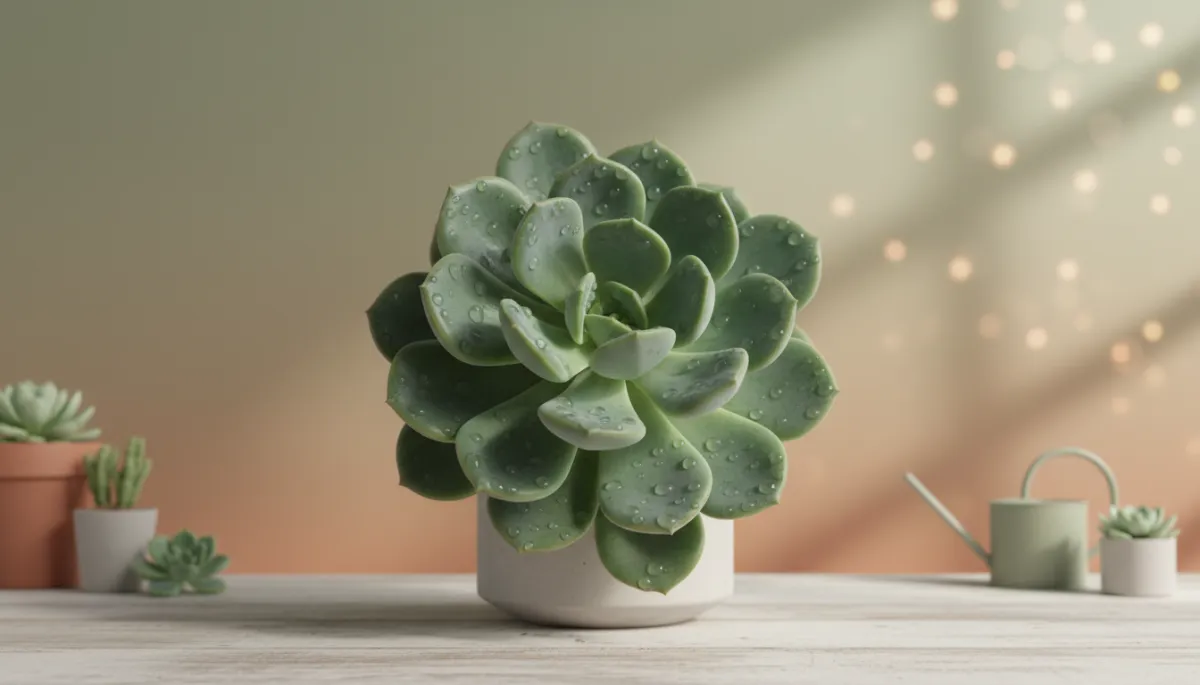
Echeveria Raindrops: Why This Rare Succulent Looks Like It Has Water Droplets on Its Leaves
Succulents, Echeveria Raindrops, Plant Care
Echeveria Raindrops: The Bumpy-Leafed Succulent That Looks Like It’s Covered in Dew
Some succulents quietly blend into the background—Echeveria Raindrops is not one of them. With chubby leaves that look like they’re holding tiny droplets of water, this rare hybrid is a natural conversation starter, and a fun choice for beginners who want something a little more unusual in their collection.
Echeveria Raindrops Care at a Glance
Before we dive into the fun details, here’s a quick snapshot of what this plant needs. If you’re new to succulents, don’t worry—Echeveria Raindrops is surprisingly manageable once you understand a few basics about light, water, and soil.
Care Category Recommendation Botanical Name Echeveria ‘Raindrops’ (hybrid succulent) Light 4–6 hours of bright, indirect to gentle direct sun Water Soak-and-dry method—water deeply, then let soil dry completely Soil Fast-draining cactus or succulent mix, amended with perlite or pumice Pot Terracotta or unglazed ceramic pot with drainage holes Growth Rate Slow to moderate—expect gradual, steady changes over time
What Makes Echeveria Raindrops So Special?
The star of the show is its leaf shape. Each fleshy leaf often develops a rounded bump near the tip that looks like a raindrop resting on the surface. These raised areas—called caruncles—give the plant a tactile, almost sculpted look that you won’t see on your average grocery-store succulent.
The rosette itself usually stays compact, with blue-green leaves that can blush pink, peach, or lavender around the edges when conditions are just right. It’s the kind of plant that encourages you to lean in closer, notice the details, and maybe even run a gentle finger along those quirky bumps.
Interesting Fact #1: No Two Plants Look Exactly the Same
One of the joys of growing Echeveria Raindrops—especially if you’re into plant collecting—is that every plant has its own personality. Some form big, dramatic droplets on nearly every leaf. Others have smaller, more subtle bumps that show up only on the older leaves near the outside of the rosette.
Factors like sunlight, temperature, watering habits, and even the age of the plant all influence how pronounced those caruncles become. Two plants grown side by side can still develop slightly differently, which makes finding “the one” incredibly satisfying for collectors and casual growers alike.
Interesting Fact #2: Sunlight Can Change Its Color
Echeveria Raindrops doesn’t just sit there looking the same year-round—it responds to light like a tiny, living mood ring. In brighter light, the blue-green base color can develop:
Soft pink or rose-colored leaf edges
Warm peach or coral tones on the outer leaves
Occasional lavender or purple hints in cooler weather
Without enough light, the plant tends to stay a more plain, muted green, and the rosette can stretch out. If you’re chasing those dreamy colors, think “bright, but gentle” sunlight rather than harsh, all-day sun.
Interesting Fact #3: A Favorite Among Collectors
Echeveria Raindrops is considered a collector’s succulent. You won’t always find it at big-box stores, which makes spotting one at a local nursery or online shop feel a bit like winning a tiny plant lottery. Many enthusiasts design entire arrangements around a single Raindrops rosette, letting it take center stage in a bowl or shallow dish garden.
If you’re just starting a plant collection, adding one rare or unusual succulent like this can make your whole display feel more intentional and curated—without needing dozens of plants to make an impact.
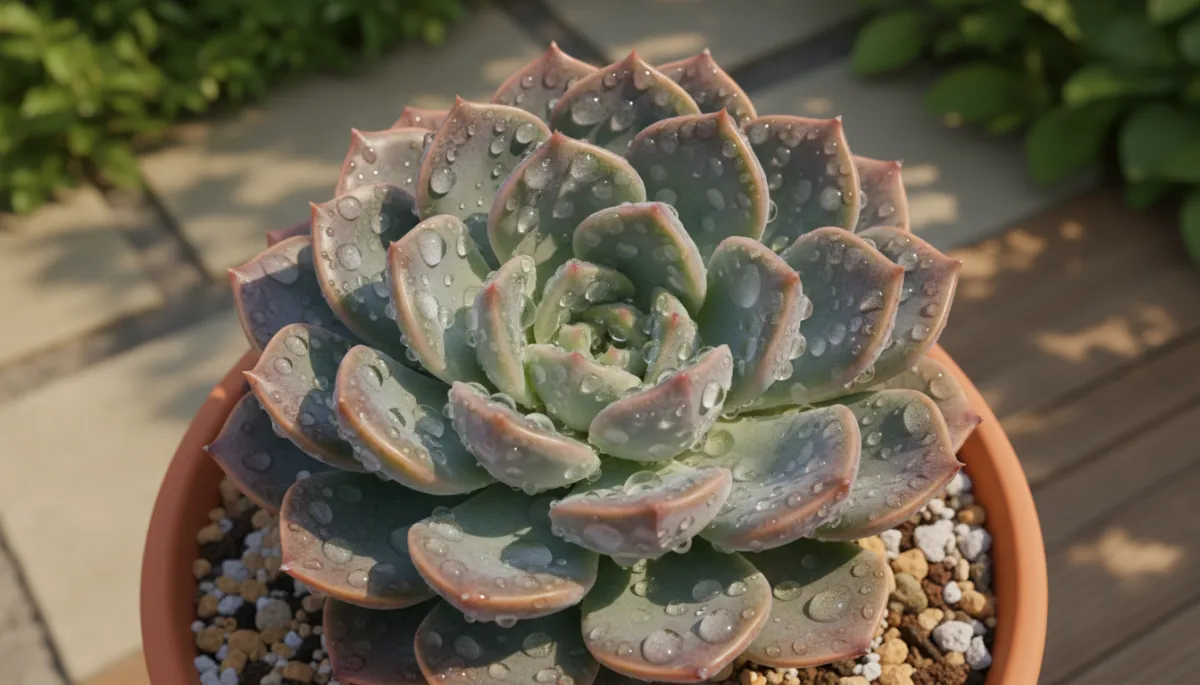
A single Raindrops rosette can anchor a simple, elegant succulent display.
Sunlight Requirements: Finding the Sweet Spot
Light is the most important part of Echeveria Raindrops care. Aim for 4–6 hours of bright light each day. Outdoors, that might mean morning sun with light afternoon shade. Indoors, a sunny windowsill—especially one facing south or east in the Northern Hemisphere—usually works well.
Signs Your Plant Needs More Light
Because beginners often worry about “doing it wrong,” it helps to know what to watch for. Your Raindrops may be craving more sun if you notice:
Stretching — the rosette opens up, and leaves grow farther apart
Paler leaves with dull, washed-out color
Leaning toward the nearest window or light source
If this happens, increase light gradually. Moving a plant from dim light straight into intense midday sun can cause sunburn—brown, crispy patches on the leaves—so think of it as “training” your succulent to handle more brightness over a week or two.
Watering Requirements: Mastering the Soak-and-Dry Method
Overwatering is the number one way people accidentally lose succulents. Echeveria Raindrops prefers to be watered using the soak-and-dry method:
Water thoroughly until it runs out of the drainage holes.
Let all excess water drain away—never leave the pot sitting in a saucer of water.
Wait until the soil is completely dry before watering again.
In warm weather, that might be every 7–10 days. In cooler months, you may water only every few weeks. When in doubt, it’s safer to wait an extra day or two than to water too soon.
Choosing the Right Soil and Pot
Healthy roots are the foundation of succulent care. Use a fast-draining cactus or succulent mix, and consider adding extra perlite, pumice, or coarse sand to improve drainage even more. Regular potting soil holds too much moisture around the roots, which can lead to rot.
For pots, terracotta is a beginner’s best friend. The porous clay allows moisture to evaporate more quickly, helping to prevent soggy soil. Whatever pot you choose, make sure it has at least one drainage hole—no exceptions here.
How Fast Does Echeveria Raindrops Grow?
Echeveria Raindrops grows at a slow to moderate pace. You probably won’t see dramatic overnight changes, but over several months you’ll notice:
New leaves forming tightly in the center of the rosette
The plant gradually widening and filling out
Caruncles becoming more defined as the plant matures
Think of it as a slow-blooming work of art—worth the wait, especially if you enjoy watching subtle changes over time.
Why Are My Raindrops Disappearing?
It can be disappointing to see those cute bumps fade or never fully develop. Don’t panic—this usually comes down to a few common factors, and many are fixable with small changes to your care routine.
Insufficient Sunlight
Without enough light, the plant may focus on basic growth rather than forming strong caruncles. Moving your Raindrops to a brighter spot—again, gradually—is often the easiest way to encourage those droplets to reappear or become more pronounced.
Young Plant Age
Very young plants may not show much bumpiness yet. As they mature, the new leaves they produce are more likely to develop the classic Raindrops texture. A little patience goes a long way here—give your plant time to grow into its look.
Environmental Stress
Sudden changes in temperature, light, or watering can temporarily affect appearance. If your plant recently moved from a greenhouse, shipping box, or new home location, it may need a bit of time to adjust before it starts showing off again.
Common Problems and Simple Solutions
Problem Likely Cause What to Do Stretching, loose rosette Not enough light Move to a brighter spot, increase light gradually Yellow, mushy leaves Overwatering or poor drainage Let soil dry, reduce watering, check pot and soil mix Wrinkled, limp leaves Underwatering Give a deep drink, then return to soak-and-dry routine
Best Companion Succulents for a Raindrops Display
If you’re building a small collection or a mixed pot, Echeveria Raindrops pairs beautifully with other succulents that share similar care needs. Look for:
Purple or black Echeverias for bold color contrast
Blue-gray rosettes to echo its cool tones
Textured plants like Haworthia for visual variety
Keeping plants with similar light and water preferences together makes care easier—and lets you enjoy a cohesive, thoughtfully arranged collection.
Seasonal Care Calendar for Beginners
Season What to Focus On Spring Gradually increase light, resume regular watering, and consider a light succulent fertilizer. Summer Monitor for heat stress, provide afternoon shade in very hot climates, and water a bit more often. Fall Slowly reduce watering as temperatures cool, and protect from early frosts. Winter Water sparingly, keep in bright light indoors, and avoid cold drafts or freezing temperatures.
Frequently Asked Questions About Echeveria Raindrops
Is Echeveria Raindrops rare?
It’s less common than many standard Echeverias, which is why collectors get excited when they find a nice specimen. That said, it’s becoming easier to find through specialty nurseries and reputable online shops.
Can Echeveria Raindrops grow indoors?
Yes—just make sure it gets plenty of bright light. A sunny windowsill, a bright sunroom, or supplemental grow lights can all work well for indoor growers.
Is it a good choice for beginners?
Absolutely. As long as you remember the basics—bright light, fast-draining soil, and careful watering—it’s a forgiving plant that rewards even newer succulent lovers with unique texture and color.
Final Thoughts: A Charming Addition to Any Succulent Collection
Echeveria Raindrops proves that a plant can be both unusual and beginner-friendly. Its bumpy leaves, shifting colors, and compact rosette make it a standout piece in any succulent arrangement, from a single-pot display on your desk to a thoughtfully curated collection on a sunny shelf.
If you’re just getting into succulent care, this plant is a gentle nudge to explore beyond the basics. Learn its light and watering preferences, pair it with a few complementary companions, and enjoy watching your collection—and your confidence as a plant parent—grow over time.