Succulents Growing Too Tall and Elongated: Why It Happens and How to Fix It
Succulents, Plant Care, Gardening Tips
Succulents Growing Too Tall and Elongated: Why It Happens and How to Fix It
If your once-cute, compact succulent has suddenly grown tall, thin, and a little awkward, you are definitely not alone. Many beginners are surprised when their “easy” plants start stretching toward the window, losing their neat shapes, and looking a bit unwell. The good news—this is a common issue, and with a few simple succulent care tweaks, you can help your plant look healthier, happier, and more balanced again.
What Does It Mean When Succulents Grow Too Tall?
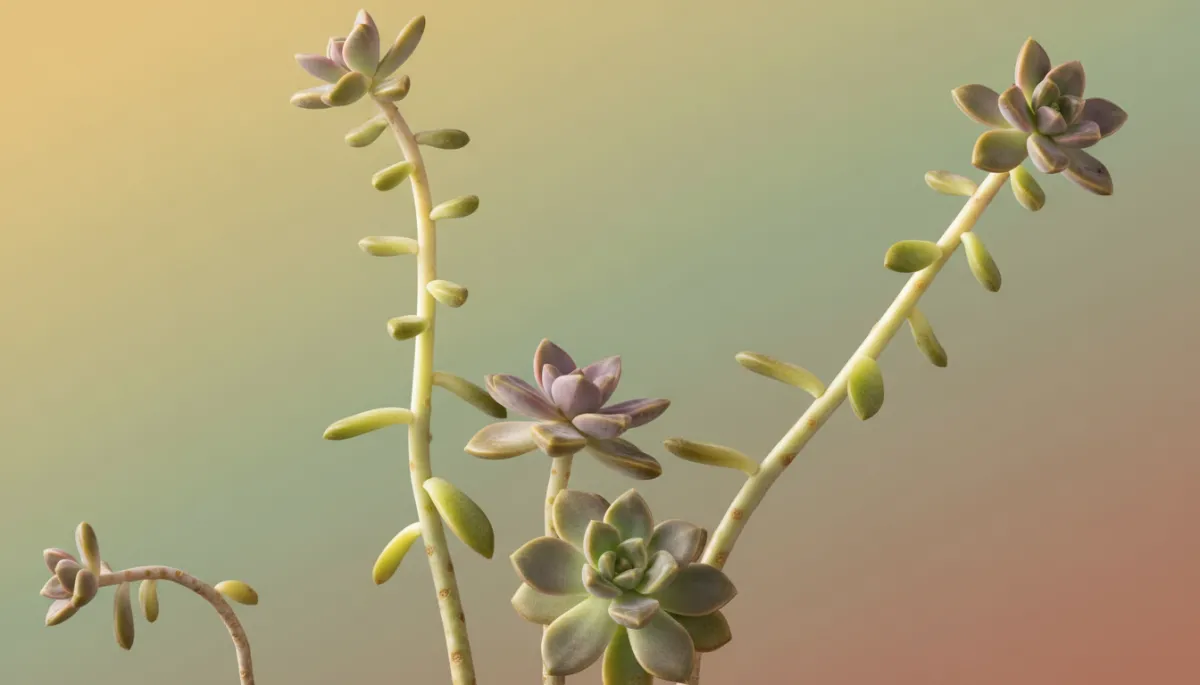
When a succulent starts growing tall and elongated, it is usually sending you a clear message—“I need more light.” Instead of staying low, full, and compact, the plant puts most of its energy into stretching its stem upward or sideways, trying to reach a brighter spot. This process is called etiolation, and it is one of the most common plant health problems succulent owners run into indoors.
A slightly taller succulent is not always a crisis, but when the stem becomes thin, the leaves spread far apart, or the plant starts leaning dramatically, it is a sign that its growing conditions are off. Understanding why this happens is the first step toward fixing it—and preventing it from happening again in the future.
Why Do Succulents Become Elongated?
The main reason succulents grow tall and leggy is not enough light. In nature, many succulents live in bright, open areas—think sunny deserts, rocky hillsides, and exposed cliffs. Indoors, they are often placed on bookshelves, coffee tables, or far from windows, where the light looks bright to us but is actually quite weak for a sun-loving plant.
Low light: The plant stretches toward the nearest light source, leaving long gaps between leaves and a thin stem behind.
Light from one direction only: A succulent on a windowsill may lean heavily toward the glass if it is never turned, creating a lopsided look.
Weak indoor lighting: Standard room lights are made for people, not plants—they rarely provide enough intensity to keep succulents compact and sturdy.
Other succulent care issues can make the stretching even worse. Too much water, overly rich soil, or frequent fertilizing can all encourage fast but weak growth. When those factors are combined with low light, the result is a tall, floppy plant that struggles to support its own weight and may eventually topple over or break.
Common Signs of an Elongated Succulent
Not sure if your succulent is truly elongated or just growing normally? Here are some easy signs to look for, especially if you are still new to gardening and plant health:
Sign What It Means Gardening Tip Long spaces between leaves The plant is stretching for more light instead of filling in. Move it to a brighter spot as soon as possible. Thin, weak stem Growth is fast but fragile, often due to low light and extra water. Improve light and let soil dry fully between waterings. Plant leaning to one side Only one side is getting decent light, so the plant grows toward it. Rotate the pot regularly to keep growth even. Faded or dull color The plant is not receiving enough light to maintain strong color. Gradually increase light to restore richer tones.
If you notice several of these signs together, it is a clear signal that your succulent care routine needs a small adjustment—especially when it comes to light. Catching these changes early makes it much easier to guide your plant back toward a more compact shape and better overall plant health.
Can an Elongated Succulent Go Back to Normal?
This is one of the first questions people ask when they see their succulent turning into a little tower. The honest answer is no—the stretched part will not shrink back down. Once a stem has grown long and thin, it will always stay that way, even if you suddenly give the plant perfect light and water from now on.
However, that does not mean the situation is hopeless. You can still:
Encourage new, compact growth at the top once lighting improves.
Prune or “behead” the plant to create a shorter, fuller shape again.
Use the elongated parts for propagation, turning one stretched succulent into several new plants.
Think of elongation as a helpful warning sign. It tells you that your succulent care routine needs a small reset. Once you respond by improving light and adjusting watering, you can guide the plant toward a healthier future—even if you cannot undo the past growth.
How to Fix Succulents That Are Growing Too Tall
Fixing a tall, leggy succulent is usually a combination of better light, slightly different watering habits, and sometimes a little pruning. Here are practical gardening tips you can start using right away, even if you are brand new to plant care.
1. Move the Succulent to a Brighter Spot
Light is the number one factor in preventing and correcting elongation. Whenever possible, place your succulent near a bright window where it can receive several hours of indirect or filtered sunlight each day. In the Northern Hemisphere, south-facing and east-facing windows usually work well for most common varieties like echeverias and haworthias.
💡 Beginner tip: If you have to squint when you stand by the window at midday, it is probably bright enough for most succulents—just protect them from harsh, burning midday rays at first.
When moving a succulent from a dim corner to a much brighter window, do it gradually. Sudden, intense light can cause sunburn, leaving pale or brown patches on the leaves. Start with a few hours of bright light each day, then slowly increase the exposure over a week or two so the plant has time to adjust.
2. Rotate the Pot Regularly
If your succulent is leaning strongly toward one side, chances are that side is facing the window. Plants naturally grow toward the strongest light source, so one simple succulent care habit can make a big difference—rotate the pot every few days, or at least once a week.
Turn the pot a quarter turn regularly so all sides get similar light.
Use watering day as your reminder—water, then rotate.
Over time, this helps the plant grow more evenly and stay more symmetrical.
This tiny gardening tip takes just a few seconds but pays off in better balance, stronger stems, and a plant that looks good from every angle, not just from the front.
3. Reduce Watering if the Light Is Low
Light and water go hand in hand. When a succulent is growing in low light, it uses water more slowly. If you keep watering as often as you would in bright sun, the plant can become soft, weak, and more prone to stretching or rotting. For healthy plant growth, especially indoors, it is safer to underwater slightly than to overdo it.
Always let the soil dry out completely before watering again—check with your finger or a wooden skewer.
Use a well-draining succulent mix so extra water can escape quickly.
In darker rooms, expect to water less often, not more.
Adjusting your watering routine to match your light levels is one of the easiest ways to protect plant health and avoid the combination of weak, watery growth and elongation that many beginners accidentally create.
4. Use a Grow Light Indoors
Not every home has a perfect sunny window—and that is okay. If your space is naturally dim, or your windows are shaded by trees or nearby buildings, a simple grow light can be a game-changer for succulent care. Modern LED grow lights are energy-efficient, beginner-friendly, and can be set on timers so you do not have to think about them every day.
Position the light 8–12 inches above your succulents, depending on the strength of the lamp.
Aim for 10–14 hours of light per day, especially in winter when days are short.
Watch for signs of stress—if leaves bleach or crisp, move the light a bit farther away.
A grow light is particularly helpful if you want to display succulents on shelves, in offices, or in rooms without good windows. It allows you to enjoy your plants where you spend your time, without sacrificing their health.
5. Prune or Behead the Succulent
If your succulent is already very tall and stretched, improving light alone will not magically shorten it. In many cases, the best gardening tip is also the scariest for beginners—grab a clean pair of scissors or pruning shears and cut it back. This process is often called “beheading,” and it is a common way to refresh leggy succulents and propagate new ones at the same time.
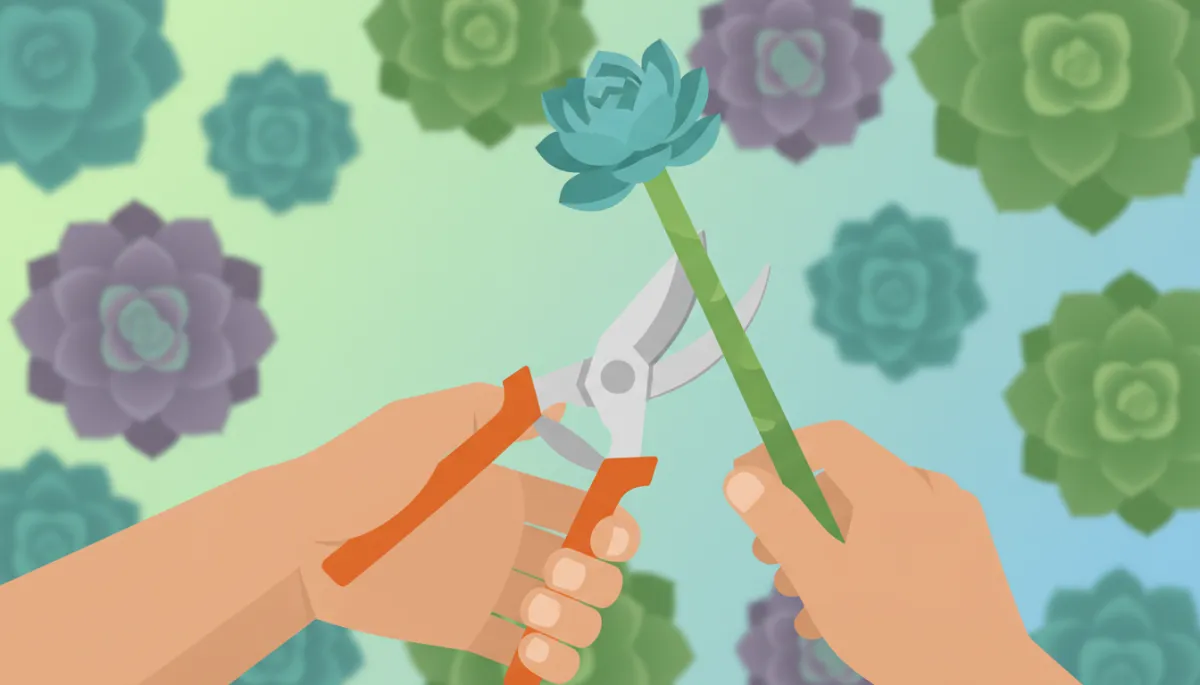
A clean cut on a tall succulent can restart growth and create easy cuttings.
💡 Pro Tip: Always sterilize your cutting tool with rubbing alcohol before you prune—this helps prevent infections and keeps plant health strong.
Cut just above a cluster of leaves, leaving a short stump in the pot and a healthy top section you can replant later. Allow both the stump and the cutting to dry for a few days so the cut ends can callus over. This reduces the risk of rot when you place them back into soil and encourages them to root more successfully.
How to Propagate an Elongated Succulent
A stretched succulent might not look picture-perfect anymore, but it is still full of potential. With a little patience, you can turn that leggy plant into several new, compact succulents. Propagation is a fun gardening project for beginners and a great way to build your collection without buying more plants.
Top Cuttings
If the top of your succulent still looks relatively healthy and rosette-shaped, you can use it as a cutting. Carefully remove a few of the lowest leaves from the stem, then cut the stem cleanly below the rosette. Let the cutting dry in a bright, airy spot for several days, until the cut end feels dry and slightly firm to the touch.
Once callused, place the cutting on top of slightly moist, well-draining soil. You can gently press the stem into the mix so it stands upright. Mist lightly every few days, or water sparingly when the soil is dry. Within a few weeks, tiny new roots should form, and the cutting will begin to anchor itself and grow like a regular plant again.
Leaf Cuttings
Many succulents can also be propagated from individual leaves. Gently twist healthy leaves off the elongated stem, making sure you get the entire leaf base—damaged or torn leaves are less likely to root. Lay the leaves on top of dry soil in a shallow tray or pot, and leave them in bright, indirect light.
Over time, the ends of the leaves will callus and then form tiny roots and baby rosettes. This process can take several weeks, so be patient. Once the new plants are large enough, you can gently separate them from the original leaf and pot them up individually. It is a slow but rewarding way to turn one stretched succulent into a whole tray of new growth.
Using the Remaining Stem
Do not ignore the stump left behind in the original pot. With good light and proper watering, many succulents will sprout new rosettes along the remaining stem. Over time, this can create a fuller, multi-headed plant that looks completely different—and often more interesting—than the original single rosette you started with.
How to Prevent Succulents from Growing Tall Again
Once you have put in the effort to fix a leggy succulent, you will probably want to avoid repeating the same problem. Prevention mostly comes down to consistent light, thoughtful watering, and a light hand with fertilizer. Here are simple, beginner-friendly habits that support long-term plant health and keep your succulents compact:
Place succulents near the brightest window available, avoiding deep interior corners.
Rotate pots regularly so all sides receive similar light over time.
Use a gritty, fast-draining soil mix designed for cacti and succulents.
Let soil dry completely between waterings—no “just in case” sips in between.
Fertilize lightly, at most a couple of times per growing season, with a diluted, balanced fertilizer.
💡 Gardening tip: If you notice new growth starting to space out or lean, adjust the light right away—catching elongation early is much easier than fixing it later.
Best Succulents for Indoor Growing
Some succulents naturally handle indoor conditions better than others. If your home does not get strong sunlight, choosing more forgiving varieties can make succulent care much easier and reduce the risk of stretching. While all succulents still need bright light, these types are often a bit more tolerant of typical indoor levels:
Haworthia: Compact, slow-growing, and more shade-tolerant than many popular rosette succulents.
Gasteria: Thick, patterned leaves that cope better with lower light and occasional neglect.
Jade plant (Crassula ovata): Naturally taller over time, so a bit of stretch is less noticeable.
Snake plant (Sansevieria): Not a classic succulent rosette, but very forgiving and great for beginners.
Matching the right plant to your space is one of the smartest gardening tips for beginners. If your windows are small or shaded, leaning toward these more adaptable species will save you frustration and keep your collection looking healthy over the long term.
Should You Cut Off the Tall Stem?
If the tall stem is thin, wobbly, and making the whole plant look unbalanced, cutting it back is often the best option. Removing the stretched growth allows you to restart the plant at a more compact height and encourages new, sturdier growth from below. It also gives you a perfect opportunity to practice propagation and create new plants from the top section and leaves.
That said, if the stem is thick, stable, and you like the way it looks, there is no rule that says you must cut it off. Succulent care is partly practical and partly personal preference—if you enjoy the plant’s quirky shape and it appears healthy, you can absolutely keep it as is and simply improve its light to prevent further stretching.
Is a Tall Succulent Always Unhealthy?
Not necessarily. Some succulents naturally grow tall or develop long, trailing stems as they mature. Jade plants, aeoniums, certain sedums, and many kalanchoes are all examples of species that can become shrub-like or cascading over time. In these cases, a taller plant can be completely normal and not a sign of poor plant health at all.
The key is to know what your plant should look like when it is healthy. If a variety is usually low and rosette-shaped—like many echeverias, for example—but yours has a long, bare stem with a tiny tuft of leaves at the top, that is a red flag. When in doubt, look up photos of mature, healthy plants of the same species and compare them to yours. This simple habit will sharpen your eye for plant health over time and make you more confident in your gardening decisions.
Can Too Much Fertilizer Make Succulents Grow Tall?
Yes—over-fertilizing can absolutely contribute to tall, weak growth, especially when light is not ideal. Succulents are not heavy feeders. In fact, they are used to surviving in lean, rocky soils with very few nutrients. When they suddenly receive strong fertilizer, they may respond with a burst of fast, soft growth that stretches even more if the light is low.
Use a balanced, water-soluble fertilizer diluted to about half strength.
Feed sparingly—once or twice during the active growing season is usually enough.
Avoid fertilizing in the darkest months of the year when light levels are lowest.
A light, measured approach to feeding supports steady, sturdy growth without pushing your plants into that lanky, overfed look that often leads to disappointment for beginners.
The Role of Watering in Elongated Growth
Watering alone does not usually cause elongation, but it can definitely make the problem worse. When a succulent receives too much water and too little light, it may grow quickly, but the new tissue is soft, weak, and more likely to stretch. On the other hand, a plant that is slightly underwatered in bright light often stays more compact and sturdy, even if growth is slower.
In bright light, succulents use water faster—watering can be a bit more frequent, as long as the soil dries in between.
In low light, they use water slowly—watering should be much less frequent to avoid weak, stretched growth and root rot.
💡 Simple rule: More light, slightly more water. Less light, much less water. Keeping these in balance supports long-term plant health.
What to Do After Moving a Succulent to Brighter Light
After you move your succulent to a brighter area—or set it under a grow light—your job is not quite finished. The plant needs time to adjust, and you will want to watch for both positive changes and signs of stress. This is where your growing plant-care instincts really start to develop.
Healthy signs: New leaves growing closer together, richer color, less leaning, and a firmer, more compact top.
Stress signs: Pale patches, brown spots, or crispy edges can indicate too much direct sun too quickly.
If you see signs of sunburn, pull the plant back a little from the window or filter the light with a sheer curtain. Adjust gradually until you find the sweet spot where your succulent gets plenty of light without burning. Over time, you will learn how each plant in your collection responds, and these small adjustments will become second nature in your gardening routine.
Frequently Asked Questions
Why is my succulent growing a long stem?
Your succulent is most likely stretching because it is not getting enough light. It is reaching toward the brightest area it can find. Improving light—by moving it closer to a sunny window or using a grow light—is the first step to slowing that stretch and encouraging more compact new growth.
Can I cut the top off my succulent and replant it?
Yes, you can. This is a common way to fix an elongated plant and create a new one at the same time. Use clean scissors, cut below the rosette, let the cutting dry for a few days, then place it on well-draining soil. With good light and gentle watering, it should root and grow into a new, compact plant.
Will my succulent go back to its original shape?
The already-stretched part will not shrink back down, but new growth can be much more compact if you improve the conditions. If you want the whole plant to look short and tidy again, pruning and propagation are usually the best options.
How much light do indoor succulents really need?
Most common succulents prefer several hours of bright, indirect light each day. A sunny windowsill, especially one that gets morning or late-afternoon sun, is often ideal. If your plant is more than a few feet away from a window, or if your room feels dim even at midday, a grow light can help provide the intensity they are missing indoors.
Is it okay if my succulent leans a little?
A slight lean is normal, especially if the light is coming from one direction. If you like the look, you do not have to change anything. However, if the lean is strong, the stem is very thin, or the leaves are widely spaced, it is a sign that the plant needs more light and possibly a small adjustment to your watering routine.
Final Thoughts
When succulents grow too tall and elongated, they are not trying to frustrate you—they are simply asking for more light and slightly different care. While you cannot undo the stretched growth, you can absolutely guide your plant back toward better health with brighter conditions, thoughtful watering, and, when needed, a gentle haircut and some propagation.
As you adjust your succulent care routine, you will start to notice patterns: how quickly the soil dries, how the leaves respond to different windows, and how new growth looks when the plant is truly happy. Those observations are the foundation of confident gardening. With a bit of patience, your leggy succulent can become a fresh start—a chance to learn, experiment, and enjoy a whole new wave of healthy, compact plants on your windowsill.