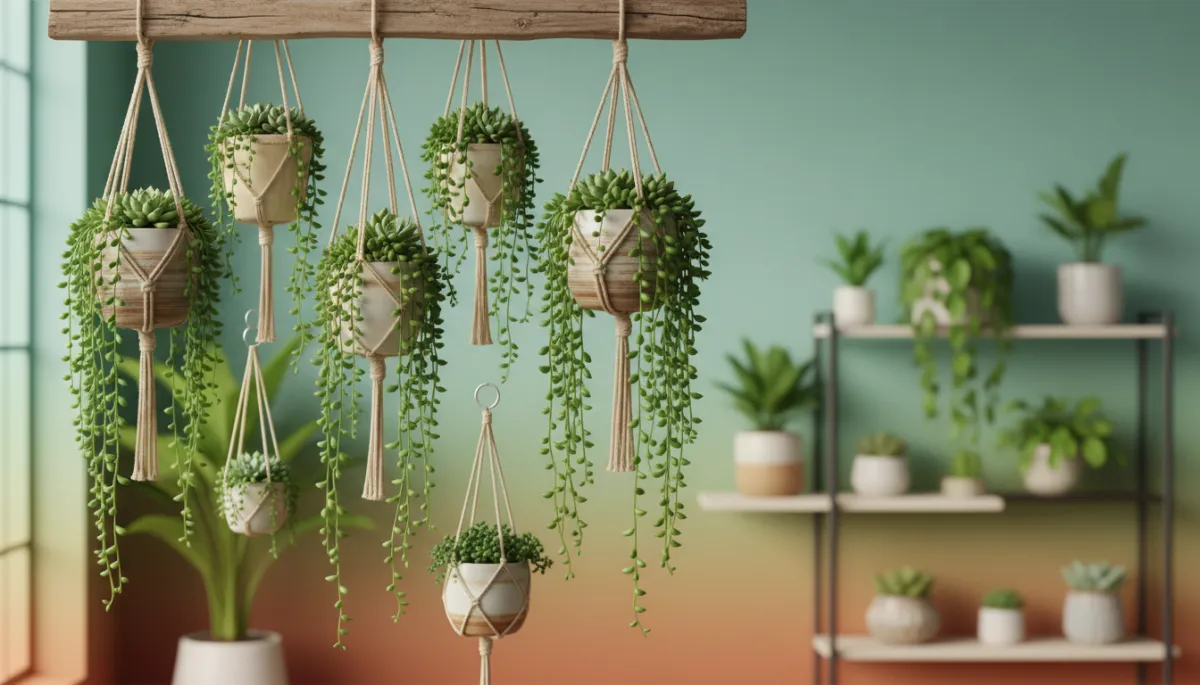
Guide to Growing Hanging Succulents Indoors & Outdoors
Indoor Gardening, Hanging Succulents, Plant Care
Hanging Succulents: A Friendly Guide to Growing Beautiful Trailing Plants Indoors and Outdoors
There’s something instantly calming about seeing plants spill over the edge of a pot, gently trailing down from a shelf or basket. Hanging succulents are a wonderful way to bring that soft, cascading greenery into your home or garden—without sacrificing any precious floor space. If you’re a beginner to plant care or indoor gardening, you’re in the right place. This guide walks you through everything you need to know to grow thriving hanging succulents, step by step.
What Are Hanging Succulents?
Hanging succulents are varieties of succulent plants that naturally trail, cascade, or spill over the edges of their pots. Instead of growing upright like a typical aloe or echeveria, these plants send out long stems that drape downward, making them perfect for hanging baskets, wall planters, and high shelves. They store water in their leaves and stems—just like other succulents—so they’re generally drought-tolerant and well suited to busy or beginner plant parents.
Why Hanging Succulents Are So Popular
Hanging succulents have become a favorite in apartments, small homes, and cozy balconies—and it’s not hard to see why. They’re beautiful, forgiving, and incredibly versatile. Let’s look at a few reasons they’ve earned a permanent place in so many homes and indoor gardens.
They Save Space
When you hang your plants, you’re using vertical space instead of competing for tabletops and windowsills. This is especially helpful if you live in a small apartment, share your home with pets, or simply prefer clear, uncluttered surfaces. A few hanging succulents can turn an empty corner into a mini indoor garden—without adding any mess underfoot.
They Are Low Maintenance
Most succulents prefer to dry out between waterings, which makes them ideal for people who forget to water—or who are just getting started with plant care. Once you understand their basic needs, hanging succulents don’t demand daily attention. A good watering routine, the right soil, and decent light go a long way toward keeping them happy.
They Add Visual Interest and Texture
Trailing plants soften sharp lines and add movement to a room. Whether it’s a curtain of pearl-like beads or strands of heart-shaped leaves, hanging succulents create a gentle, flowing look that feels cozy and inviting. They pair beautifully with neutral decor, wooden shelves, and simple ceramic pots—perfect for a calm, understated style.
They Work Indoors and Outdoors
Many hanging succulents are just as comfortable on a bright windowsill as they are on a sheltered patio. With the right light and temperature, you can enjoy them indoors year-round, or move them outside during warmer months. This flexibility makes them a great bridge between indoor gardening and outdoor container gardening.
Best Hanging Succulents to Grow
Not sure where to start? Here are some beginner-friendly hanging succulents that are both beautiful and relatively easy to care for. You don’t need to collect them all—choosing one or two that you love is more than enough to begin your indoor gardening journey.
String of Pearls (Senecio rowleyanus)
This classic favorite produces long, trailing stems covered in round, bead-like leaves that really do look like tiny green pearls. It’s a striking statement plant, especially in a hanging basket or on a high shelf where the strands can drape freely. Give it bright, indirect light, a pot with drainage, and allow the soil to dry out before watering again.
String of Bananas (Senecio radicans)
Similar to String of Pearls but often easier for beginners, String of Bananas has small, banana-shaped leaves that grow quickly in the right conditions. It appreciates bright, filtered sunlight and a well-ventilated spot. Water when the top layer of soil feels dry, and avoid letting it sit in water for too long.
Burro’s Tail (Sedum morganianum)
Burro’s Tail has thick, rope-like stems densely packed with plump, overlapping leaves. It’s gorgeous, but a bit delicate—those leaves fall off easily if bumped. Place it somewhere where it won’t be brushed against often, provide bright indirect light, and water sparingly. Over time, the stems can grow quite long, creating a dramatic cascading effect.
String of Hearts (Ceropegia woodii)
Technically a semi-succulent, String of Hearts is beloved for its delicate, heart-shaped leaves and slender, trailing vines. It’s perfect for softening a bookshelf or hanging near a window. Give it bright, indirect light, let the soil dry between waterings, and trim the vines occasionally if you want a fuller, bushier look.
Ruby Necklace (Othonna capensis)
Ruby Necklace stands out with its slender, bean-shaped leaves and vibrant purple-red stems that deepen in color with more sunlight. It grows quickly in bright light, especially near a sunny window or on a sheltered balcony. Use fast-draining soil, water deeply but infrequently, and enjoy the rich contrast it adds to a neutral-toned room.
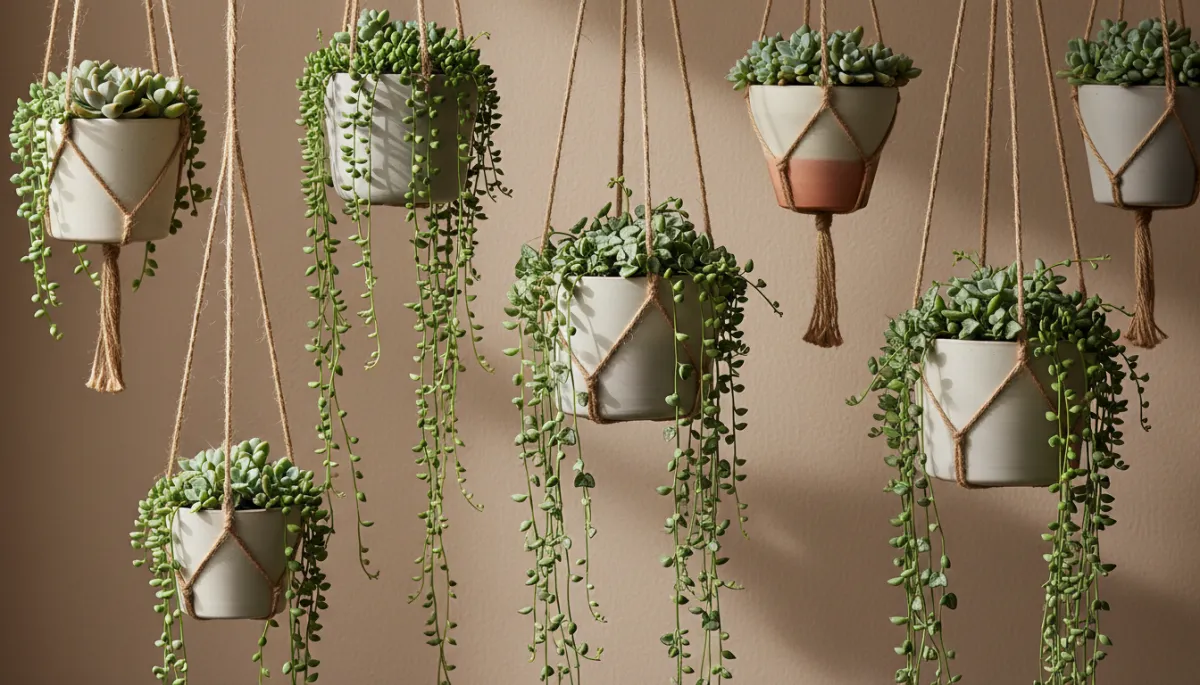
Mixing a few trailing varieties creates a simple, layered indoor garden display.
Choosing the Right Pot for Hanging Succulents
The pot you choose can make or break your plant care routine. Hanging succulents dislike sitting in soggy soil, so drainage is non-negotiable. Look for containers with at least one drainage hole at the bottom, and avoid decorative pots that trap water unless you use them as outer covers only. Lightweight materials—like plastic, resin, or thin terracotta—are easier to hang safely than heavy, thick pots. Terracotta is especially beginner-friendly because it helps wick away excess moisture from the soil, reducing the risk of overwatering.
Choosing the Right Soil
Regular potting soil holds too much water for most succulents. Instead, use a well-draining succulent or cactus mix. If you only have standard potting soil on hand, you can improve it by mixing in ingredients like perlite, pumice, or coarse sand—aim for a light, crumbly texture that doesn’t clump when wet. Good soil is one of the easiest ways to protect your hanging succulents from root rot and keep plant care simple.
How Much Light Do Hanging Succulents Need?
Light is one of the most important pieces of the puzzle. Too little light, and your succulents may stretch and look sparse; too much harsh sun, and the leaves can scorch. The good news is that, with a bit of observation, you can usually find a sweet spot in your home or garden.
Indoors: Finding the Right Spot
Most hanging succulents do best with 4–6 hours of bright, indirect light each day. Great locations include east-facing windows, a few feet back from a sunny south-facing window, or bright rooms with sheer curtains. If your plant’s stems are stretching toward the light or the leaves are losing their color, that’s a gentle sign it may need a brighter spot.
Outdoors: Sun, Shade, and Gentle Transitions
Outside, many hanging succulents enjoy morning sun and afternoon shade, especially in warmer climates. If you’re moving a plant from indoors to outdoors, do it gradually—start in a shaded area and slowly introduce more light over a week or two. This helps prevent sunburn and keeps your plant’s transition stress-free.
Watering Tips for Hanging Succulents
Overwatering is the most common issue beginners face with hanging succulents. A simple, reliable method is the “soak and dry” approach. Water thoroughly until you see water run out of the drainage holes, then let the soil dry out completely before watering again. Depending on your home’s temperature and humidity, this might mean watering every 1–3 weeks rather than on a strict schedule. When in doubt, it’s usually safer to wait a little longer than to water too soon.
Common Mistakes to Avoid
Watering Too Often
Because succulents store water in their leaves and stems, they simply don’t need frequent watering. Constantly damp soil can lead to soft, mushy leaves and root rot. Always check the soil with your finger—if it still feels cool or moist, wait a few more days.
Using Pots Without Drainage
It’s tempting to use pretty containers that don’t have holes, but trapped water quickly creates problems. If you love a particular pot, you can keep your succulent in a plastic nursery pot with drainage and simply place it inside the decorative one—just remember to empty any excess water that collects at the bottom.
Providing Too Little Light
If your hanging succulent looks thin, leggy, or pale, it may not be getting enough light. Try moving it closer to a window or choosing a brighter room. For indoor gardening in darker homes, a small grow light can be a helpful backup, especially during winter.
Using Dense, Heavy Soil
Dense soil holds onto water and can suffocate roots. If you notice water pooling on top of the soil or taking a long time to drain, it’s probably too heavy. Repot your plant into a lighter, grittier mix designed for succulents and cacti.
Decorating Ideas for Hanging Succulents
Once you’ve mastered the basics of plant care, the fun really begins—styling your hanging succulents around your home. Here are a few simple ideas to inspire your indoor gardening setup.
Window Displays
Hang a few small planters at different heights near a bright window to create a soft, green curtain. This works especially well in kitchens and living rooms, where you’ll see and enjoy your plants every day.
Floating Shelves and High Ledges
Place trailing succulents on floating shelves so their stems can spill gracefully over the edge. Mix them with books, candles, or framed photos for a cozy, layered look that still feels clean and minimal.
Balcony and Patio Corners
If you have a balcony or small outdoor space, hanging succulents are a gentle way to add greenery without taking up seating or walking room. Combine a few different varieties in neutral pots for a calm, cohesive look.
Reading Nooks and Home Offices
A hanging plant beside your favorite chair or above your desk can make the space feel softer and more inviting. It’s a simple way to bring a touch of nature into the places where you relax or focus most.
How to Propagate Hanging Succulents
Many hanging succulents are easy to multiply, which means you can grow new plants for free. For most trailing varieties, simply snip a healthy stem a few inches long, remove any leaves from the bottom section, and let the cutting dry for about a day so the cut end can callus. Then, place it on top of moist, well-draining soil and mist lightly until roots form. Over time, you’ll have new plants to fill out your pots, share with friends, or use in other corners of your home.
Seasonal Care Tips for Hanging Succulents
Spring: Wake-Up Season
As days get longer and brighter, your succulents usually start growing more actively. You can slowly increase watering, check for any roots poking out of the bottom of the pot, and repot if needed. This is also a great time to propagate and tidy up any long, tangled stems.
Summer: Sun and Heat
In summer, pay attention to strong sun and high temperatures, especially if your plants are near a hot window or outside. You may need to water a bit more often, but still allow the soil to dry between waterings. If leaves start to look scorched, move the plant to a slightly shadier spot.
Fall: Slowdown and Adjustment
As light levels drop, growth often slows. This is your cue to gradually reduce watering. If your hanging succulents have been outdoors, bring them inside before temperatures dip too low, and place them near a bright window to help them adjust.
Winter: Rest and Gentle Care
In winter, most succulents need far less water, since they’re not actively growing and light is weaker. Let the soil dry thoroughly and water sparingly, sometimes as little as once a month depending on your home. If possible, move them to the brightest spot you have to help them through the darker days.
Frequently Asked Questions About Hanging Succulents
Are hanging succulents good for beginners? Yes—many trailing succulents are very beginner-friendly, as long as you provide good light, well-draining soil, and avoid overwatering.
Can hanging succulents live indoors year-round? Absolutely. As long as they receive enough bright, indirect light and aren’t overwatered, most varieties will do just fine indoors throughout the year.
Do I need fertilizer? Light feeding during the growing season—spring and early summer—can help, but it isn’t essential. If you choose to fertilize, use a gentle, diluted fertilizer designed for succulents or houseplants, and apply it sparingly.
Final Thoughts
Hanging succulents are a simple, beautiful way to bring more greenery into your life—especially if you’re just starting out with indoor gardening. They don’t ask for much, yet they offer so much in return: texture, color, and a sense of calm that’s hard to beat. With the right pot, soil, light, and a gentle watering routine, your trailing plants can thrive for years. Start with one or two varieties you love, watch how they respond, and let your collection grow naturally as your confidence does.