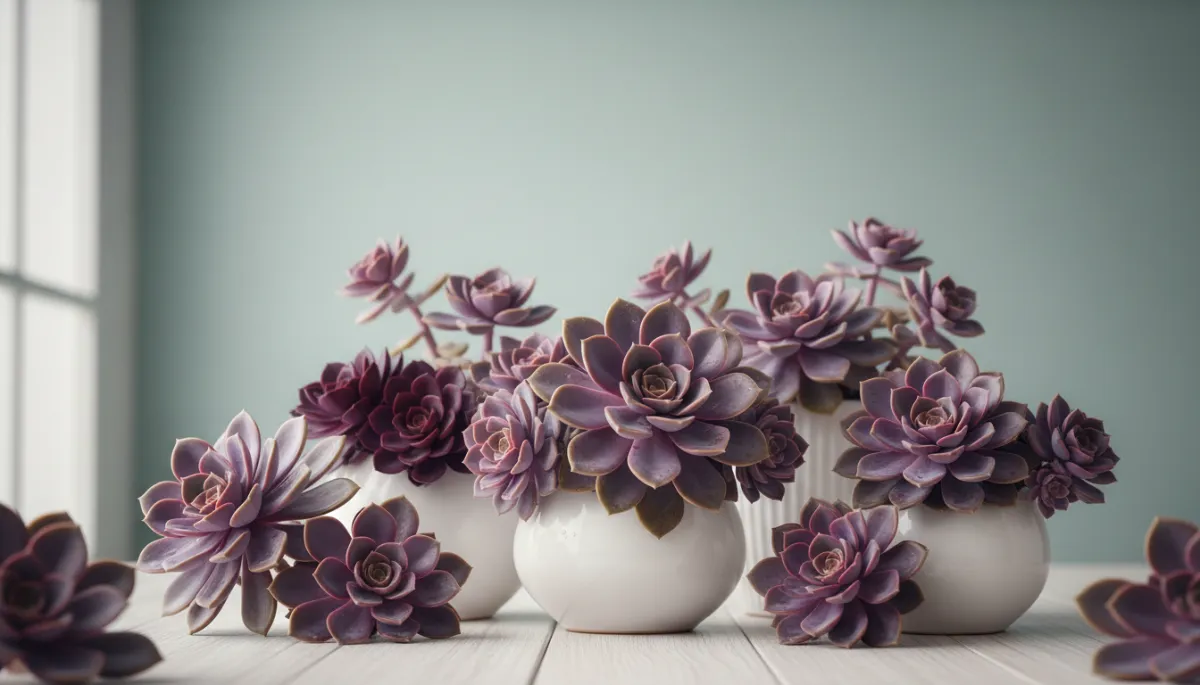
Purple Succulents: The Most Beautiful Varieties and How to Keep Their Vibrant Color
Succulents, Home Décor, Plant Care
Purple Succulents: Stunning Varieties and Simple Tips to Keep Their Color
Purple succulents have a way of stopping you in your tracks. While classic green plants feel calm and familiar, purple varieties bring a moody, elegant twist that looks just as good on a sunny windowsill as it does in a modern living room. If you’ve ever wondered whether those rich shades are real—or how to keep them from fading—you’re in the right place. Let’s explore the most beautiful purple succulents, how to care for them, and smart ways to use them in your home décor and garden.
Why Some Succulents Turn Purple
Many people assume purple succulents are dyed, but in most cases, that gorgeous color is completely natural. The secret lies in pigments called anthocyanins. These pigments help protect the plant from intense light, temperature changes, and other environmental stressors—kind of like sunscreen for your succulent. When a plant gets the right mix of light, temperature, and succulent care, those pigments become more visible, and green leaves shift into shades of lavender, plum, and deep burgundy.
Why Purple Succulents Are So Popular
They Add Dramatic Contrast to Any Collection
Purple foliage instantly stands out against green plants, white pots, and neutral décor. A single rosette in a deep plum tone can transform a simple arrangement into something that looks curated and intentional. Whether you’re styling a coffee table tray or a small outdoor planter, purple succulents give you that eye-catching contrast with almost no extra effort—perfect if you love bold plant aesthetics but want to keep maintenance low.
They Fit Seamlessly With Many Interior Styles
Purple tones are surprisingly versatile. Soft lavender varieties look right at home in Scandinavian or minimalist spaces, while deeper, almost-black succulents complement industrial and contemporary interiors. Pair them with matte white pots for a clean look, or with textured ceramics and wood accents for a cozy, boho feel. However you style them, they add a subtle pop of color that feels grown-up rather than flashy—great news for anyone building a calm, cohesive home décor scheme.
They Are Genuinely Low Maintenance
Most purple succulents follow the same basic rules as their green cousins: bright light, well-draining soil, and infrequent watering. If you remember to let the soil dry out between waterings and give them plenty of light, they tend to reward you with steady growth and rich color. That makes them ideal for busy plant lovers, new gardeners, or anyone who wants high-impact style without high-maintenance care routines.
They Look Good All Year Long
Unlike seasonal blooms, purple succulents hold their shape and color for months at a time. Many even deepen in tone during cooler weather, giving you an evolving display through the year. Indoors, they stay compact and tidy, so you don’t have to worry about them overtaking your shelves or windowsills. Outdoors, they bring reliable color to rock gardens, patio pots, and borders, even when other plants are taking a break.
Beautiful Purple Succulent Varieties to Try
Purple Pearl Echeveria
This classic rosette succulent has broad, dusty lavender leaves that look almost like a flower. It thrives in bright, indirect light and needs a gritty, well-draining soil mix. Water when the soil is completely dry, and avoid getting water trapped in the rosette to keep it looking pristine on your desk or windowsill.
Perle von Nürnberg
Often called one of the prettiest succulents, this variety blends soft pink, purple, and gray tones. It loves bright light and good airflow. Use a cactus or succulent mix, water sparingly, and you’ll be rewarded with layered rosettes that look like they belong in a magazine shoot.
Black Prince Echeveria
With deep burgundy leaves that can appear nearly black, Black Prince adds instant drama to any arrangement. Give it full to partial sun, a fast-draining soil, and light watering. It pairs beautifully with pale green or silver succulents, creating a rich color contrast that feels intentional and stylish.
Purple Heart Plant (Tradescantia pallida)
Technically a semi-succulent, Purple Heart is loved for its long, trailing stems and bold purple foliage. It shines in hanging baskets, window boxes, and tall planters. Provide bright light, trim it regularly to keep it full, and water when the top layer of soil feels dry. It’s a fantastic choice if you want cascading color in your home or on a sheltered patio.
Graptopetalum Superbum
This variety forms flat rosettes in soft pastel lavender, often with a powdery coating. Under bright conditions, the color intensifies, making it a standout in mixed planters. Plant it in a shallow container with excellent drainage, and water lightly—its thick leaves store plenty of moisture.
Ruby Necklace (Othonna capensis)
Ruby Necklace is a trailing succulent with thin, bean-like leaves and purple-red stems. In bright light, the foliage shifts from green to rich reddish-purple. It’s perfect for shelves and hanging planters where its vines can spill gracefully over the edge. Use a light mix, water when dry, and enjoy the movement it brings to your plant displays.
Purple Delight
Compact rosettes and soft violet tones make Purple Delight ideal for small spaces and tabletop arrangements. It prefers bright sun, dry soil between waterings, and good air circulation. Tuck it into a shallow bowl with a few contrasting succulents, and you have an instant centerpiece with minimal effort.
How to Keep Purple Succulents Vibrant
If your purple succulent starts turning green, don’t panic. It’s usually responding to its environment, not “losing” its genetics. With a few simple succulent care tweaks—especially around light and water—you can often coax that color right back.
Give Them Plenty of Light
Light is the number one factor in rich color. Most purple succulents need 4–6 hours of bright light each day. Without enough light, they fade, turn greener, and may grow tall and stretched instead of compact and full. Indoors, a south- or west-facing window is ideal. Outdoors, morning sun with light afternoon shade works well, especially in hotter climates.
Avoid Overwatering With a Soak-and-Dry Routine
Overwatering is one of the quickest ways to dull color and damage roots. Instead of frequent sips, use a simple soak-and-dry method:
Water thoroughly until it runs out of the drainage holes.
Let the soil dry out completely before watering again.
Always empty saucers so roots aren’t sitting in water.
This approach mimics the natural drought-and-rain cycle succulents are used to—and keeps leaves firm, colorful, and healthy.
Use Temperature to Your Advantage
Slightly cooler temperatures, especially at night, can intensify purple tones. Many varieties show their best color when daytime temperatures are mild and nights are a bit cooler. Just be sure to protect your plants from frost and extreme cold—most succulents prefer to stay above 40°F (4°C).
Best Soil and Pots for Healthy Purple Succulents
Good soil and the right container are the foundation of successful succulent care. Both choices affect how quickly water drains—which directly impacts root health and, ultimately, color and growth.
Choosing a Well-Draining Soil Mix
Skip heavy garden soil and look for a cactus or succulent mix. For even better drainage, you can blend in extra perlite, pumice, or coarse sand. The goal is a mix that feels gritty rather than dense, so water can move through quickly and roots never sit in soggy conditions.
Terracotta vs. Ceramic Pots
When it comes to pots, drainage holes are non-negotiable. From there, you can choose a style that fits your home décor and your watering habits:
Terracotta pots are breathable and help excess moisture evaporate faster—great if you tend to water a little too often or live in a humid climate. Their warm, earthy color also pairs beautifully with purple foliage.
Ceramic pots with drainage offer endless color and texture options. Choose matte whites, soft grays, or subtle patterns to keep the focus on your plants while still adding personality to your shelves and tables.
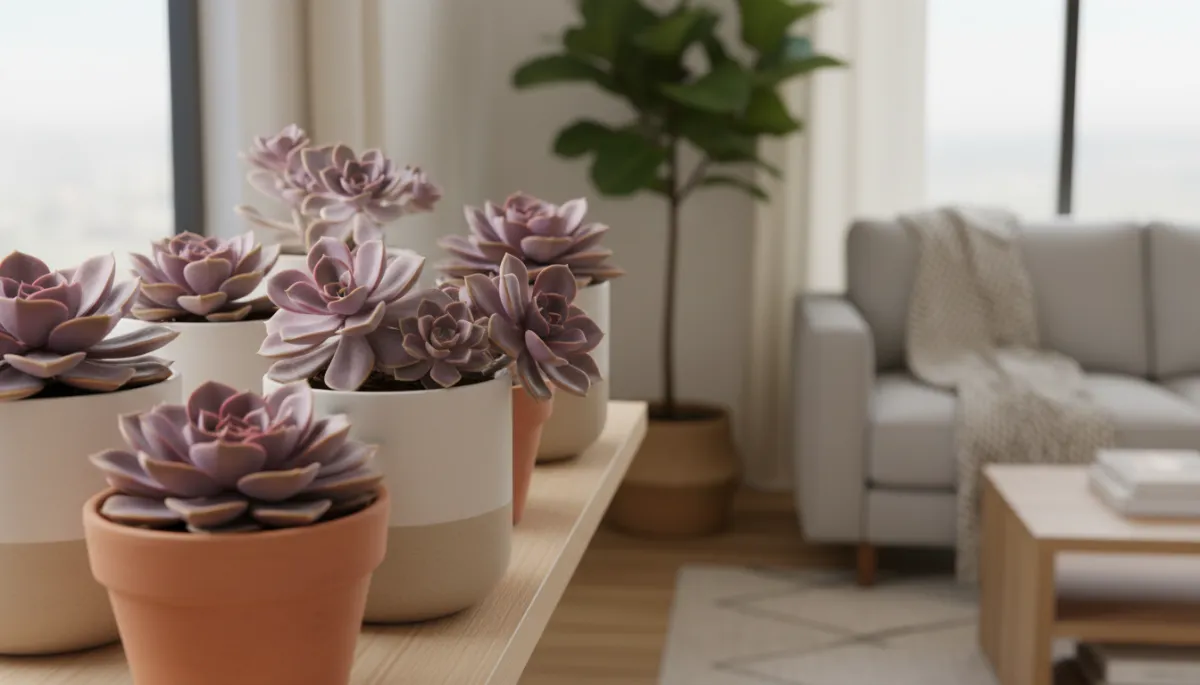
Neutral pots and purple foliage create an easy, polished home décor moment.
Styling Purple Succulents in Your Home Décor
Home Offices and Desks
A small purple rosette in a simple pot can instantly warm up a work-from-home setup. Place it near a bright window where it can get plenty of light, and let it break up the lines of your laptop, notebooks, and monitor. It’s a tiny, living reminder to take a breath between emails.
Coffee Tables and Side Tables
Low, wide arrangements of purple and green succulents make beautiful, low-maintenance centerpieces. Cluster a few small pots on a tray, or plant several varieties together in a shallow bowl. The mix of textures and colors adds interest without blocking conversation—or the TV.
Bookshelves and Built-Ins
Purple succulents look especially striking against stacks of books and neutral walls. Tuck a tiny pot beside a framed photo, or let a trailing variety like Ruby Necklace spill gently over the edge of a shelf. The result is a relaxed, layered look that feels curated but not cluttered.
Entryways and Console Tables
Placing a purple succulent near your front door creates a welcoming first impression. Pair it with a small dish for keys and a candle or lamp, and you have a simple vignette that feels thoughtful and pulled together every time you walk in.
Using Purple Succulents in Outdoor Gardens
Outdoors, purple succulents shine in rock gardens, raised beds, and patio containers. Combine them with green and silver varieties, white stones, or gravel pathways for a calm, cohesive palette. Popular color pairings include purple with soft green, purple with silvery-blue, and purple with crisp white—each combination adds depth without overwhelming the space.
Common Problems and How to Fix Them
Purple Succulent Turning Green
The usual culprit is low light. Move your plant gradually to a brighter spot, and give it a few weeks to respond. As long as it’s otherwise healthy, color often returns as the plant produces more protective pigments.
Stretching or “Leggy” Growth
Tall, stretched stems with wide gaps between leaves are another sign of insufficient light. Increase brightness, then consider trimming and re-rooting healthy tops in fresh soil to create a fuller plant.
Mushy or Translucent Leaves
Soft, squishy leaves usually point to overwatering or poor drainage. Remove damaged leaves, let the soil dry completely, and adjust your watering schedule. In severe cases, unpot the plant, trim away rotten roots, and repot in a drier, grittier mix.
Brown or Crispy Spots
Brown patches can be a sign of sunburn or extreme heat. If your plant was suddenly moved into intense midday sun, shift it to a spot with bright but filtered light, and introduce stronger sun gradually over time.
Seasonal Care Tips for Purple Succulents
Spring: Wake-Up Season
As days get longer, growth picks up. You can water a bit more frequently, refresh the top layer of soil, and gradually move plants into brighter light to encourage strong color and compact growth.
Summer: Sun and Heat Management
Monitor plants for signs of sunburn, especially during heat waves. Morning sun with afternoon shade is often ideal. Water deeply but less often, always allowing soil to dry out between waterings.
Fall: Gentle Transition
As temperatures cool, many purple succulents deepen in color. Gradually reduce watering, check pots for good drainage before rainy seasons, and start planning which outdoor plants need to come indoors before frost.
Winter: Rest and Protection
During winter, most succulents slow their growth. Water sparingly, focusing on keeping the soil barely moist at the roots rather than fully soaked. Keep plants away from drafty windows and cold glass, and provide as much light as possible to prevent stretching.
Quick Answers to Common Questions
Are purple succulents real? Yes—those colors come from natural pigments, not dye, when plants receive the right light and care.
Why did my purple succulent turn green? It’s usually getting too little light. Move it somewhere brighter, and adjust slowly to avoid sunburn.
Do purple succulents need full sun? Most prefer bright light and can handle several hours of direct sun, but intense afternoon sun in very hot climates may be too strong. Aim for bright, indirect light or morning sun for the best balance of color and health.
Final Thoughts
Purple succulents prove that low-maintenance plants can still feel luxurious. With the right succulent care—good light, well-draining soil, thoughtful watering, and a suitable pot—you can enjoy rich color and sculptural shapes all year long. Whether you’re styling a calm, neutral living room, brightening up a home office, or adding interest to an outdoor planter, these plants bring a touch of drama without demanding constant attention. Start with one variety that catches your eye, experiment with where it looks best in your home décor, and let your purple collection grow from there.