Succulent Wall Planters: The Complete Guide to Creating a Beautiful Living Wall for Your Home
Succulents, Vertical Gardening, Home Decor
Succulent Wall Planters: A Complete Beginner’s Guide to Living Walls at Home
Turning a blank wall into a lush, living artwork is easier than you might think. With succulent wall planters, you can enjoy vertical gardening, add personality to your home decor, and grow plants that actually thrive—even if you’re a total beginner. Let’s walk through everything you need to know, step by step, so you can create a beautiful succulent wall you’ll love coming home to.
What Are Succulent Wall Planters?
Succulent wall planters are vertical gardening systems designed to hold succulents on walls, fences, or other upright surfaces. Instead of lining pots along a windowsill, you’re essentially hanging a garden on the wall—like a piece of art that just happens to be alive. These planters come in different styles, but they all share one goal: to keep soil, plants, and water securely in place while your succulents grow and fill in the frame.
Because succulents have shallow roots and store water in their leaves, they’re perfectly suited for this kind of vertical gardening. They don’t need deep pots, they use less water than many other plants, and they’re surprisingly forgiving—ideal if you’re just starting out or have a history of, well, plant casualties.
Why Succulent Wall Planters Are So Popular
They Maximize Space in Any Home
Not everyone has a big backyard—or a backyard at all. Succulent wall planters make vertical gardening possible in small apartments, rental homes, and tiny balconies. By moving plants up onto the wall, you free up floor and counter space while still getting that lush, green look you’ve been craving. They’re perfect for:
Apartments and condos with limited outdoor space
Home offices that need a calming, natural touch
Narrow balconies, patios, and entryways
They Instantly Upgrade Your Home Decor
Empty walls can make a room feel flat and unfinished. A succulent wall planter adds texture, color, and movement—turning a plain surface into a statement piece. Whether your style is minimalist, boho, or classic, a living wall fits right in and makes your space feel warmer and more inviting. Think of it as hanging a painting that slowly changes over time as your plants grow and shift.
They’re Surprisingly Low Maintenance
Succulents are famous for being tough. Their fleshy leaves store water, so they can handle a bit of neglect—actually, they prefer it to constant attention. With the right soil and light, your succulent wall planter won’t demand daily watering or complicated care routines. For busy people, new plant parents, or anyone who forgets to water on time, that’s a huge win.
Best Succulents for Wall Planters
Not every succulent is a perfect match for vertical gardening. The best choices have shallow roots, compact growth, and a habit of gently filling in gaps. Here are some beginner-friendly favorites to look for when planning your living wall.
Echeveria
Echeverias form beautiful rosettes that look like sculpted flowers. They come in soft blues, dusty pinks, purples, and classic greens, making them perfect focal points. Plant them where you want the eye to land first—front and center in your design.
Sedum
Sedums are versatile, hardy, and great as fillers. Their tiny leaves and spreading habit help cover bare spots and create a soft, carpet-like effect. Look for varieties in greens, golds, and blues to add texture without overwhelming your design.
Graptopetalum (Ghost Plant)
With its pale gray-lavender leaves, Graptopetalum adds a soft, dreamy touch. It pairs beautifully with deeper greens and rich purples, giving your wall planter a sophisticated, layered look—without any extra effort on your part.
Sempervivum (Hens and Chicks)
Sempervivums are tough, cold-tolerant succulents that produce clusters of rosettes. The “hen” forms the main plant, while “chicks” spread around it, gradually filling in your wall planter with minimal help from you—great if you like a slightly wild, natural look.
Crassula
Crassulas, like the classic Jade Plant or String of Buttons, bring interesting shapes and structure. Use them to break up softer textures and add a bit of architectural flair to your vertical garden.
String of Pearls & String of Bananas
These trailing succulents are your go-to plants for creating that “waterfall” effect. String of Pearls has round, bead-like leaves, while String of Bananas offers curved, banana-shaped foliage. Both look gorgeous spilling over the edges of your planter, softening lines and adding movement.
Choosing the Perfect Wall Planter for Your Space
Your planter is just as important as your plants. The right style will support healthy growth, match your home decor, and make vertical gardening feel simple instead of stressful. Here are some popular options to consider.
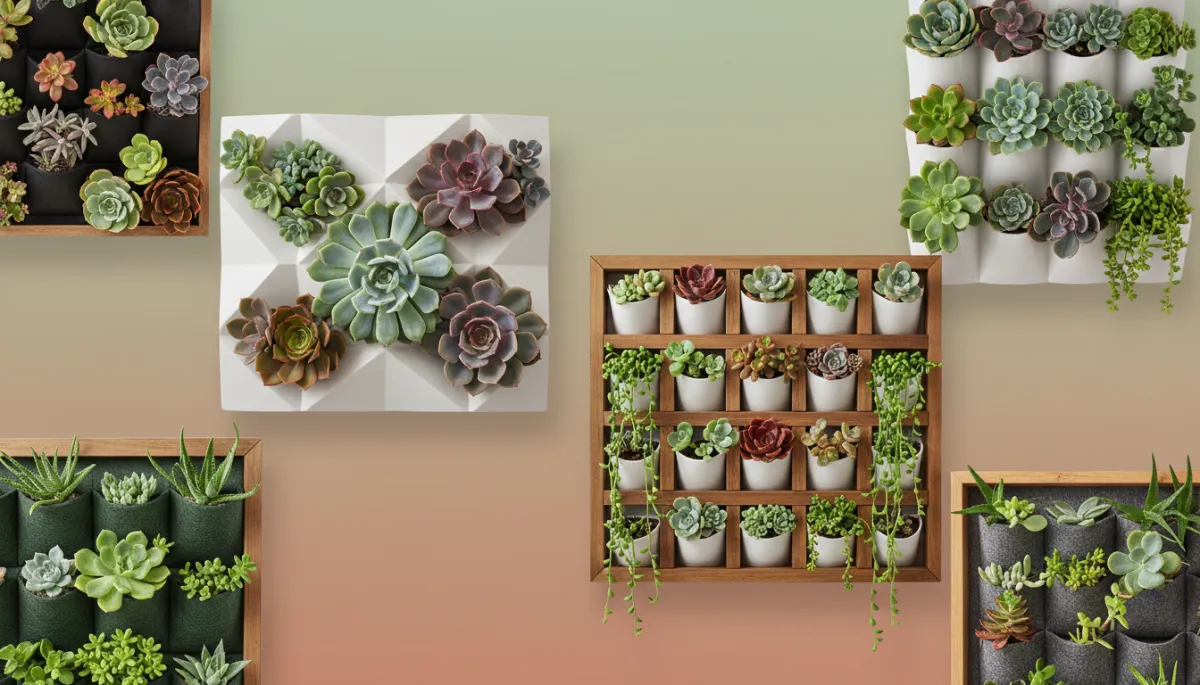
Wooden Frame Planters
These look like picture frames filled with plants. They’re sturdy, timeless, and blend beautifully with neutral interiors. Wooden frames are ideal if you want your succulent wall to feel like a piece of art hanging in your living room or hallway.
Pocket Planters
Fabric or felt pocket systems are lightweight, affordable, and beginner-friendly. Each pocket holds its own plant, which makes rearranging or replacing individual succulents very easy. They’re especially handy for renters or anyone who wants flexibility without heavy hardware.
Modular Systems
Modular planters are made of panels that connect together, so you can start small and expand over time. If you dream of a full wall of greenery but want to begin with a manageable project, modular systems give you room to grow—literally and creatively.
Geometric Containers
Hexagons, diamonds, and other geometric shapes add a modern touch to your home decor. Arrange several small containers in a pattern, and you’ll get a clean, contemporary look that still feels warm thanks to the plants themselves.
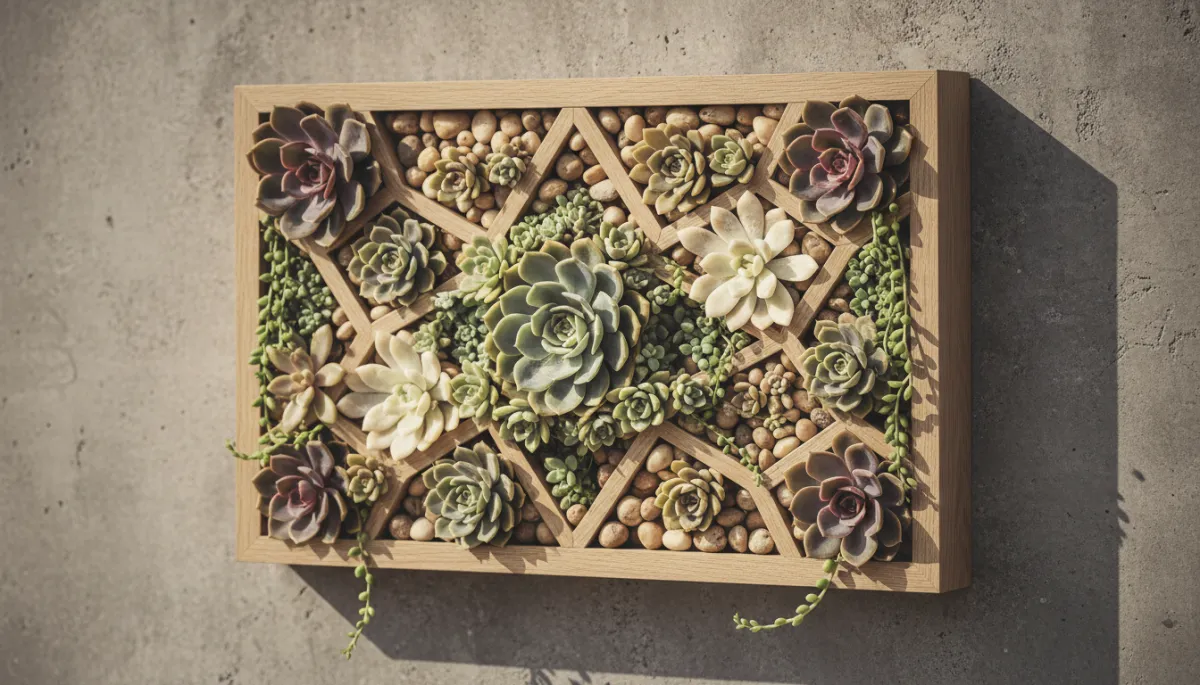
Mixing rosettes and trailing succulents creates a rich, layered living wall.
How to Build a Simple Succulent Wall Planter
Ready to create your own vertical garden? Here’s a beginner-friendly roadmap you can follow, whether you’re using a store-bought frame or a DIY setup.
Step 1: Choose the Right Location
Succulents love bright, indirect light. Indoors, look for an east-facing window, a bright hallway, or a sunroom where light is gentle but consistent. Outdoors, aim for filtered light—like a covered patio or a wall that gets morning sun and afternoon shade. Too little light, and plants stretch and lose color; too much, and they can scorch.
Step 2: Select a Sturdy Structure
Soil, water, and mature plants are heavier than they look. Make sure your frame or planter is strong enough to handle the weight and that you’re using proper wall anchors or hooks. If you’re unsure, start with a smaller piece—it’s easier to hang and less intimidating for beginners.
Step 3: Use the Right Soil Mix
Regular potting soil holds too much moisture for succulents, especially in a vertical planter. Instead, use a cactus or succulent mix, or amend potting soil with plenty of perlite or coarse sand. The goal is fast drainage—wet roots are the fastest route to plant problems like root rot.
Step 4: Design Before You Plant
Before you start digging holes, lay your succulents out on a table in the same shape as your frame. Play with color, height, and texture until you’re happy with the arrangement. Place taller or more dramatic plants where you want attention, and use low, spreading varieties to connect everything together. Think of it like painting with plants—no art degree required.
Step 5: Let Roots Establish Before Hanging
Once everything is planted, keep the frame flat for a couple of weeks. This gives roots time to grab onto the soil and hold themselves in place. During this period, water lightly and let the soil dry between waterings. When plants feel secure and don’t wiggle easily, you’re ready to hang your new living wall.
Creative Design Ideas for Your Living Wall
Once you understand the basics, you can have a lot of fun with design. Here are a few beginner-friendly themes to inspire your next project.
Monochromatic magic: Use mostly green succulents in different shapes and sizes for a calm, cohesive look that works with any home decor.
Sunset palette: Combine oranges, reds, purples, and soft yellows to mimic the colors of a sunset on your wall.
Geometric patterns: Arrange plants in stripes, chevrons, or simple shapes for a modern, graphic feel.
Waterfall effect: Use trailing succulents along the bottom edge to create the look of greenery gently flowing downward.
Light, Water, and Simple Care Tips
Most succulent wall planters do best with bright, indirect light and a “less is more” watering routine. If plants start stretching toward the light or losing their rich color, they likely need a brighter spot. If leaves turn mushy, translucent, or fall off easily, cut back on watering and make sure your soil drains quickly.
A simple rule for beginners is the soak-and-dry method: water thoroughly, let excess water drain away, then wait until the soil is completely dry before watering again. In warm months, that might mean once every week or two; in cooler seasons, you may water far less. Always adjust based on how your plants and soil look, not just the calendar.
Common Problems and Easy Fixes
Root rot: Usually caused by overwatering or poorly draining soil. Let the planter dry out, remove any mushy plants, and improve drainage before replanting.
Stretching (leggy growth): A sign of not enough light. Move your planter to a brighter spot and rotate it occasionally for even growth.
Falling leaves: Often from overwatering or rough handling. Water less often, and be gentle when pruning or rearranging plants.
Pests: Mealybugs, aphids, and spider mites can occasionally show up. Treat early with a gentle spray of water, insecticidal soap, or neem oil, and isolate heavily affected plants if needed.
Seasonal Care for Your Succulent Wall
Spring: Growth picks up. Check for winter damage, trim any leggy stems, and consider a light, succulent-safe fertilizer once plants are actively growing.
Summer: Monitor heat and sunlight. In very hot climates, offer afternoon shade and water a bit more often—while still letting soil dry between waterings.
Fall: As temperatures cool, gradually reduce watering. This helps prepare plants for a slower, more restful season.
Winter: Growth slows down. Keep your succulent wall in a bright spot, avoid cold drafts, and water sparingly—only when the soil is completely dry.
Final Thoughts: A Living Wall Anyone Can Create
Succulent wall planters prove that you don’t need a big yard, endless free time, or expert skills to enjoy gardening. With a simple frame, a handful of hardy succulents, and a bit of planning, you can bring vertical gardening into your home decor in a way that feels fresh, modern, and totally doable for beginners.
Start with a small piece, learn how your plants respond to your light and watering routine, and let your confidence grow along with your living wall. Before long, that once-empty wall will be one of your favorite spots in the house—a calm, green reminder that beautiful gardens can climb, not just spread.